Subsistence Farming in Rural Morocco
A Forgotten Pillar of Food Security and Social Stability
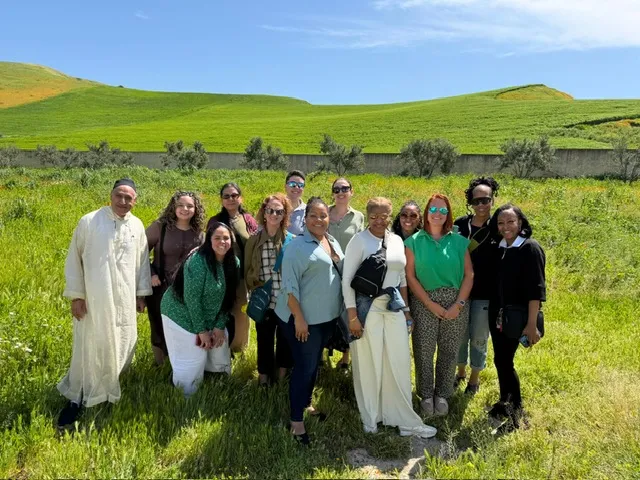
On the occasion of Eid, returning to my beloved outskirts of Fez is never just a visit. It is a return to memory and to observation. I took a group of American visitors with me for a Couscous lunch at Sheikh Jilali in Welja.
This year, the land welcomed me differently.
The rains had been generous. The fields were alive again, dressed in green, offering their quiet abundance: fava beans, peas, potatoes, tomatoes, mint, coriander, onions. It was a reassuring sight, one that seemed to promise continuity.
And yet, beneath that beauty, something felt unsettled.
Large stretches of land lay untouched.
This was not the countryside I had known.
There was a time when these same lands fed their people with dignity. What was grown was consumed. What was exceeded was shared or sold nearby. Villages sustained themselves and, at times, supported their neighbors. Subsistence farming was not a concept—it was a way of life. A quiet system of balance that required no explanation.
It was, in every sense, a safety valve.
Today, that balance has shifted.
Rural communities now depend almost entirely on the market, markets supplied from far away, where transportation adds cost, and distance adds uncertainty. What was once grown within reach is now bought from elsewhere. Prices rise, dependency deepens, and resilience weakens.
We have moved from a living system to a fragile one.
The reasons are not difficult to see.
Migration has emptied the fields of hands. Small farmers face resource, access, and support limitations. And agricultural policies, often oriented toward scale and export, have overlooked the quiet importance of subsistence farming—the kind that sustains life without spectacle.
But what is being lost is not only agricultural.
It is social.
It is cultural.
It is stability.
Restoring the value of subsistence farming is no longer a nostalgic idea. It is a necessity.
To support small farmers. To facilitate access to water and basic tools. To encourage local cooperation. To rethink policies that include, not exclude, this essential form of agriculture.
Perhaps what is needed is not a grand reform, but a return to balance.
A “Green Plan” that recognizes the dignity of small-scale farming could do more than increase production. It could restore independence, reduce migration, and allow rural life to remain rooted where it belongs.
Recent global crises, from pandemics to disrupted supply chains, have reminded us of something simple:
A system that depends entirely on the outside is always vulnerable.
In this light, subsistence farming is not backward.
It is wise.
It reconnects people to land, to effort-to-reward, and to community for survival.
What remains of this heritage is not something to remember.
It is something to protect.
And perhaps, something to rebuild.