Mauritania
Mauritania: Across the Sahara and the Ancient Caravan Roads
Mauritania is a land of extraordinary space, where the Sahara stretches toward the Atlantic and ancient caravan routes disappear into horizons that seem without end. With most of the country covered by desert, it remains one of Africa's least-travelled destinations—a place for travellers drawn to wilderness, history and the experience of travelling far beyond familiar routes.
For centuries, Mauritania stood along the great trans-Saharan networks that connected North and West Africa. Caravans carried salt, gold, books, ideas and people across enormous distances, while oasis settlements became centres of trade, scholarship and survival. Ancient towns such as Chinguetti and Ouadane still preserve traces of that Saharan world, while nomadic traditions continue to reveal a remarkable human relationship with one of the earth's most demanding environments.
To travel through Mauritania is to experience the desert not simply as scenery, but as a way of life. Dune seas, rocky plateaus, oases, camel caravans and remote settlements unfold slowly along the road, while the Atlantic coast introduces another landscape where ocean and Sahara meet. Here, distance itself becomes part of the journey.
Sarah Tours approaches Mauritania in the spirit of the great overland journey. Our small-group expeditions are designed for curious and active travellers who value discovery more than luxury and understand that remote travel requires patience, flexibility and respect. We travel with experienced local teams, support communities along our routes, and seek encounters that respect rather than intrude upon traditional ways of life.
These are not journeys designed simply to cross a country. They are opportunities to understand the historic caravan routes, desert cultures and landscapes that have connected the Maghreb, Sahara and West Africa for centuries.
Join Sarah Tours for an overland journey into Mauritania—where the road becomes part of the destination and the Sahara still reminds us what it once meant to travel.
Our Mauritania trips
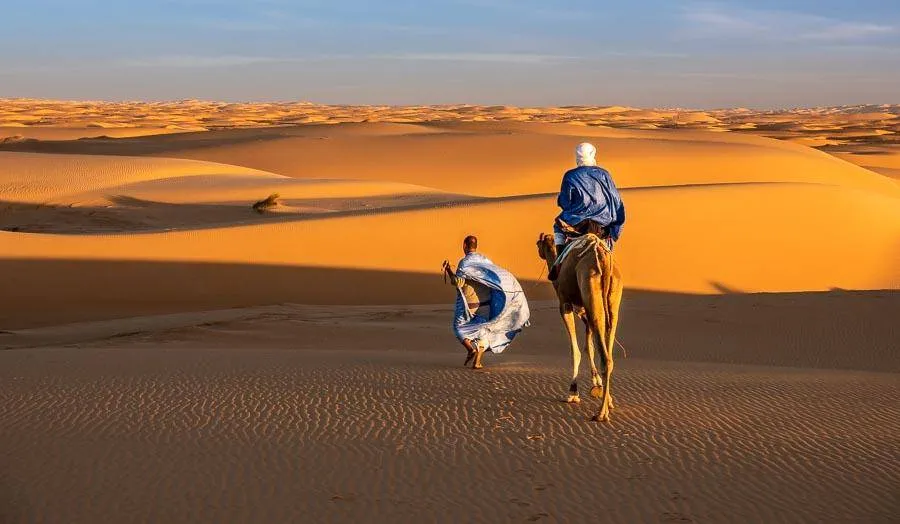
Mauritania Adventure Tour
Is Mauritania a travel destination? Yes, indeed. This Mauritania overland expedition takes you from the Capital, Nouakchott to the remote hinterland of the Adrar, along with a small group of like-minded travelers like yourself accompanied by expert local guides to help you get the best of Mauritania overland culture and adventure.
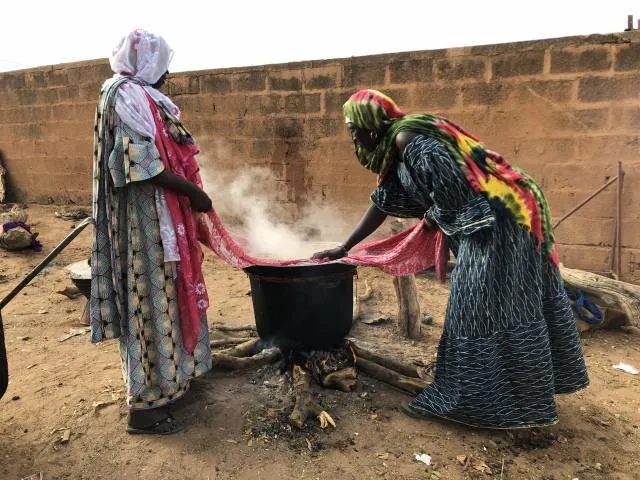
Goodwill Tours to Mauritania
Are group tours cheaper? Group tours are usually cheaper than private. However, you should also consider that group tours save you a lot of time in research, organization, and booking your trip and activities. On this Mauritania small group tour, you will encounter nomadic settlements under Goat hair tents and transhuman villages mainly of pastors and camel herders, you will also visit Imragen villages and hear about the symbiotic existence of fishermen and dolphins. Mauritania's capital, Nouakchott, creates an exciting starting point for our seven-day expedition exploring natural sites and lagoons with the bird species of Banc d’Arguin National Park and monk seals at Cap Blanc creating in contrast to the arid desert with wildlife watching encounters way off the traditional stomping ground of binocular wielding twitchers. the trip starts from Nouakchott across vast swathes of desert, visit the ancient caravan terminal Trans-Sahara trade at Chinguetti and Ouadane, drive along the natural and little-visited coastline, and then head off on a desert expedition into the Sahara. Exploring Mauritania, you’ll travel overland past dunes, salt swamps, and mountains to Chinguetti, an almost deserted stone town that was once the capital of the Moorish Empire, and still holds a library with a fascinating collection of ancient books and manuscripts. The Atlantic shoreline, around Nouadhibou, is devastatingly beautiful with the wrecks of ships catching the imagination of pioneers of another era prior to heading inland towards the world’s third-largest monolithic site, Ben Amera, which casts shade over the desert like a gigantic ancient sun clock. Based on African American Heritage tours. Bring small donations or supplies if visiting schools or centers (ask in advance) Learn a few phrases in Hassaniya Arabic or Pulaar Dress respectfully (lightweight, loose, and modest clothing) Be open to slower rhythms and tea ceremonies – they’re important! Partner with local NGOs or cultural associations to deepen impact
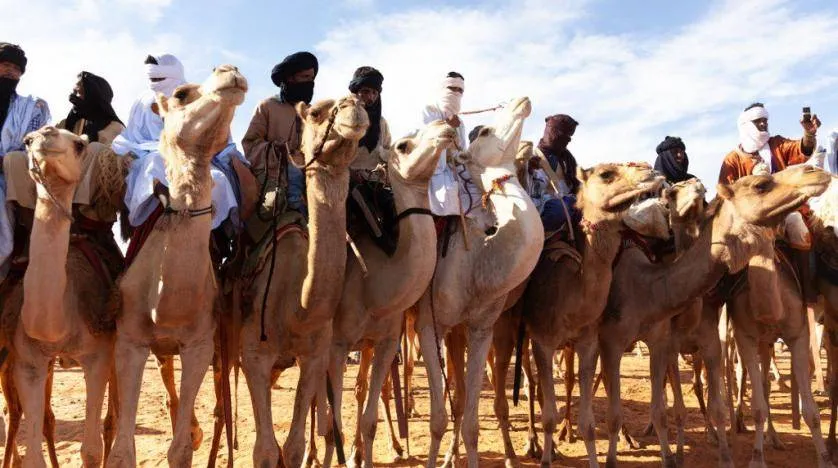
Mauritania Trans-Sahara Expedition
Are group tours cheaper? Group tours are usually cheaper than private. However, it would be best if you also considered that group tours save you a lot of time in research, organization, and booking your trip and activities. Welcome to our Mauritania cultural and overland tours. The Atlantic shoreline around Nouadhibou is devastatingly beautiful, with the wrecks of ships catching the imagination of pioneers of another era before heading inland towards the world’s third-largest monolithic site of Ben Amera, which casts shade over the desert like a gigantic ancient sun clock.
Customer reviews
Needs improvement
0 reviews
Guide
0Needs improvement
Transportation
0Needs improvement
Meals
0Needs improvement
Accommodation
0Needs improvement
No reviews yet.
Mauritania articles
Active Travel as a Cultural Practice
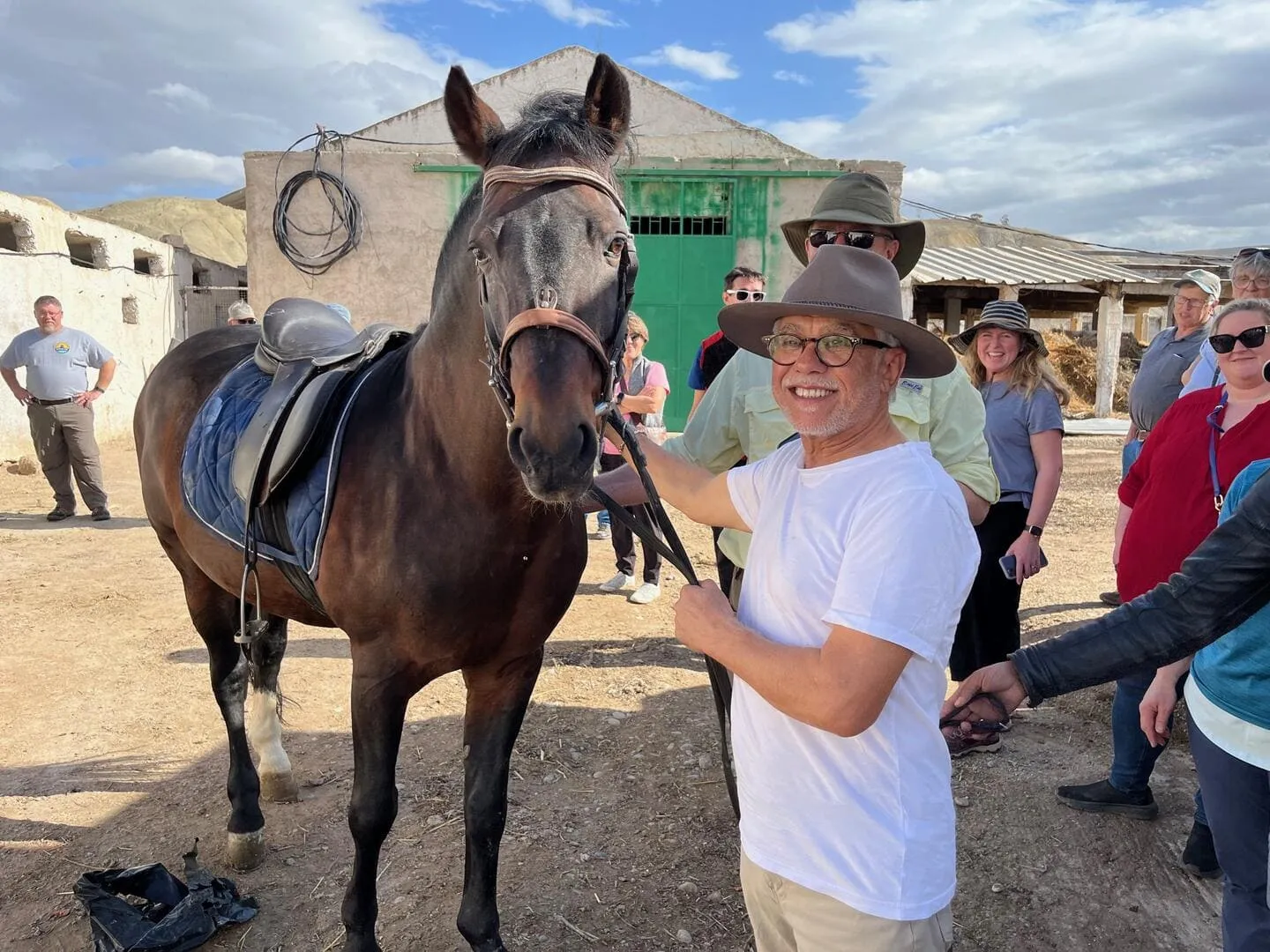
Active Travel as a Cultural Practice Active travel is often misunderstood. It is frequently reduced to effort, performance, or adventure for its own sake. But in its deeper sense, active travel is not about doing more — it is about perceiving more. At Sarah Tours, we understand active travel as a cultural practice: a way to engage with landscapes, histories, and communities through movement, presence, and time. Movement as a Way of Knowing Before maps, before borders, before vehicles, humans understood the world by moving through it. Walking, riding, and crossing landscapes were not activities; they were methods of survival, trade, communication, and learning. Active travel reconnects us to our original relationship with place. Walking slows perception. Riding restores rhythm. Overland travel gives distance its meaning. When the body is involved, understanding deepens. Walking, Hiking, and Trekking: Attention in Motion Walking is the most human pace of travel. It allows us to notice transitions — in architecture, vegetation, language, and social life — that faster travel erases. In this sense, hiking and trekking are not sports. They are forms of attention. They allow conversation, silence, observation, and repetition. They welcome all ages and abilities when designed with care. Walking teaches us that landscapes are not scenery; they are lived spaces shaped by history and daily labor. Horse and Camel Riding: Following Ancient Rhythms Horseback and camel travel are not novelties. They are historical modes of movement, deeply tied to trade routes, migration, and survival. Following animal trails is a way to read the land as it was once read by water sources, passes, winds, and the distance between rest points. These journeys access regions that mass tourism never reaches, not because they are hidden, but because they require patience and respect. Here, movement becomes memory. Overland Travel: Restoring Meaning to Distance Overland travel is not about comfort or speed. It is about transition. Traveling by truck or Land Cruiser across natural and historical landmarks restores a sense of scale. Borders are crossed slowly. Landscapes unfold gradually. Cultures shift in ways that feel earned rather than consumed. In small groups, overland journeys become shared learning spaces — where geography, history, and human adaptation reveal themselves between destinations. Active Travel Is Not About Age or Performance One common misconception about active travel is that it is for the young or the extreme. In truth, active travel is about attitude, not endurance. At Sarah Tours, journeys are adapted, not imposed. Effort and leisure coexist. Rest, nourishment, and rhythm are as important as movement. This allows travelers of diverse ages, abilities, and interests to engage actively with the place in ways that feel respectful and sustainable. Leisure and Research Can Coexist Active travel can be restorative and joyful, but it can also be a method of inquiry. Walking through agricultural landscapes teaches about food systems. Crossing caravan routes reveals trade history. Camping in remote regions deepens ecological awareness. For travelers with academic, professional, or research interests, movement becomes a way of asking better questions — not from distance, but from within the landscape itself. Three Ways to Approach Active Travel Active travel can be understood through three complementary lenses: • Professionally — through thoughtful design, safety, pacing, and logistics • Academically — through human geography, history, ecology, and anthropology • Philosophically — through reflection on time, body, presence, and perception These approaches are not separate. Together, they form a comprehensive approach to engaging the world. A Different Understanding of Activity Active travel, as we practice it, is not about accumulation or achievement. It is about learning through movement. It asks us to slow down, to notice, and to let the body become a bridge between landscape and understanding. It reminds us that travel does not begin with arrival; it begins with how we move. This is not an adventure for its own sake. It is engagement, practiced carefully.
Overland Tours and Expeditions
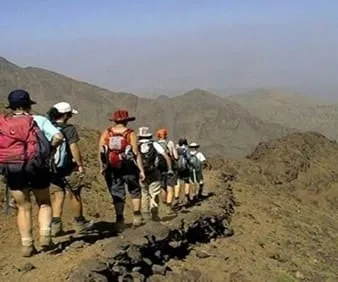
Overland Journeys with Sarah Tours: Small Groups, Deep Connections, Real Africa Some journeys are not meant to be rushed. They are meant to be crossed slowly, by road, by foot, by effort, and shared with a small circle of like-minded travelers. At Sarah Tours, our overland expeditions are designed for small groups of 6 to 12 travelers, creating an intimate travel experience where connection, flexibility, and cultural depth take priority over speed or spectacle. Why Overland Travel Feels Different Traveling overland allows you to feel the distance, not just measure it. From Morocco to Spain, or from Morocco deep into Mauritania, Senegal, and The Gambia, the journey becomes part of the story, not something to skip between flights. Borders are crossed slowly. Landscapes change gradually. Languages, rhythms, and cuisines shift along the way. This is travel as it once was—immersive, grounded, and human. Small Groups, Big Experiences (6–12 Travelers) Keeping our groups small allows us to: • Adapt routes and activities • Enter places large groups cannot • Spend time with local communities • Move at a natural, human pace Everyone is seen. Everyone is heard. The journey becomes shared—not managed. Overland Journeys with Sarah Tours: Small Groups, Deep Connections, Real Africa Some journeys are not meant to be rushed. They are meant to be crossed slowly, by road, by foot, by effort, and shared with a small circle of like-minded travelers. At Sarah Tours, our overland expeditions are designed for small groups of 6 to 12 travelers, creating an intimate travel experience where connection, flexibility, and cultural depth take priority over speed or spectacle. Why Overland Travel Feels Different Traveling overland allows you to feel the distance, not just measure it. From Morocco to Spain, or from Morocco deep into Mauritania, Senegal, and The Gambia, the journey becomes part of the story, not something to skip between flights. Borders are crossed slowly. Landscapes change gradually. Languages, rhythms, and cuisines shift along the way. This is travel as it once was—immersive, grounded, and human. Small Groups, Big Experiences (6–12 Travelers) Keeping our groups small allows us to: • Adapt routes and activities • Enter places large groups cannot • Spend time with local communities • Move at a natural, human pace Everyone is seen. Everyone is heard. The journey becomes shared—not managed. A Fully Equipped Overland Team, Based in Fez Our operations are coordinated from Fez, the cultural heart of Morocco. Our office is fully equipped to organize and support active overland expeditions across North and West Africa—and beyond. Each expedition is supported by: • Experienced overland drivers • Well-trained expedition staff • Reliable all-terrain vehicles • A dedicated cook and assistant, responsible for meals and camp setup This allows travelers to focus fully on the experience while we handle the logistics. Fresh, Local Food—Cooked with Care Food is an essential part of the journey. On all our overland expeditions, we provide: • Fresh ingredients sourced from local markets • Meals prepared by our expedition cook • Healthy, balanced cuisine adapted to active travel Cooking with local products supports communities and keeps meals vibrant, nourishing, and authentic. Good food means better energy—and better exploration. Active Travel for Body and Mind Our overland journeys are not passive. They are designed to stimulate both body and mind, blending movement with discovery. Depending on the region, travelers may: • Hike through mountain landscapes • Walk ancient caravan routes • Bike rural tracks • Trek desert or savannah terrain • Explore villages on foot Activity is balanced with rest, reflection, and shared meals—allowing travelers to truly absorb the places they cross. More Than a Route, A Cultural Crossing Whether crossing the Strait of Gibraltar into Spain, or following the long Atlantic road south into West Africa, our overland expeditions are cultural crossings, not just geographic ones. They are built on: • Respect for local cultures • Meaningful encounters • Slow discovery • Shared effort and shared stories This is where travel becomes memory—and memory becomes understanding. Why Travel Overland with Sarah Tours Because intimacy matters. Because movement creates meaning. Because the road teaches what airports cannot. Sarah Tours overland expeditions are for travelers who seek depth over speed, connection over consumption, and experience over comfort—without sacrificing safety, care, or quality. A Fully Equipped Overland Team, Based in Fez Our operations are coordinated from Fez, the cultural heart of Morocco. Our office is fully equipped to organize and support active overland expeditions across North and West Africa—and beyond. Each expedition is supported by: • Experienced overland drivers • Well-trained expedition staff • Reliable all-terrain vehicles • A dedicated cook and assistant, responsible for meals and camp setup This allows travelers to focus fully on the experience while we handle the logistics. Fresh, Local Food—Cooked with Care Food is an essential part of the journey. On all our overland expeditions, we provide: • Fresh ingredients sourced from local markets • Meals prepared by our expedition cook • Healthy, balanced cuisine adapted to active travel Cooking with local products supports communities and keeps meals vibrant, nourishing, and authentic. Good food means better energy—and better exploration. Active Travel for Body and Mind Our overland journeys are not passive. They are designed to stimulate both body and mind, blending movement with discovery. Depending on the region, travelers may: • Hike through mountain landscapes • Walk ancient caravan routes • Bike rural tracks • Trek desert or savannah terrain • Explore villages on foot Activity is balanced with rest, reflection, and shared meals—allowing travelers to truly absorb the places they cross. More Than a Route, A Cultural Crossing Whether crossing the Strait of Gibraltar into Spain, or following the long Atlantic road south into West Africa, our overland expeditions are cultural crossings, not just geographic ones. They are built on: • Respect for local cultures • Meaningful encounters • Slow discovery • Shared effort and shared stories This is where travel becomes memory—and memory becomes understanding. Why Travel Overland with Sarah Tours Because intimacy matters. Because movement creates meaning. Because the road teaches what airports cannot. Sarah Tours overland expeditions are for travelers who seek depth over speed, connection over consumption, and experience over comfort—without sacrificing safety, care, or quality.
Africa Feeds the World
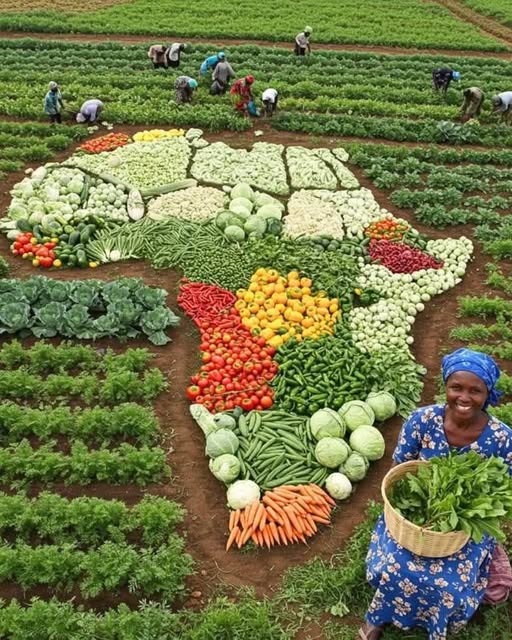
I recently came across a striking image that stopped me in my tracks, a map of Africa, not drawn with lines or borders, but sculpted entirely from fresh produce. Tomatoes, cabbage, peppers, carrots, beans… each region thoughtfully represented by the fruits of its soil. It wasn’t just clever. It was profound. It told a story, one that resonates deeply in our times. Think about it. In the 21st century, the future of humanity lies not only in the advancement of technology but also in the return to what is essential: health, nourishment, and the land. The so-called developed world, for all its wealth and innovation, is struggling to feed itself, not for lack of resources, but because it has lost touch with them. The relentless pace of modern life has no time for the patient rituals of planting, harvesting, or tending. Their soils are poisoned by industrial greed. Their diets are corrupted by speed and artificiality. The pharmaceutical giants, armed with science and ambition, have failed to provide effective remedies for the chronic ailments associated with this lifestyle. And so we are left with one truth: there is no substitute for good food. ![] Real food, grown with care, is the only sustainable medicine for the body and soul. And it does not come from massive Agro-corporations or distant stock exchanges. It comes from the humble hands of small farmers. It is the work of communities who till the land each morning and fill the markets with life and colour by dusk. It is not the Memphis Cotton Exchange or the Detroit Wheat Market that feeds a nation; it is the woman with her basket of greens, the man ploughing a modest field, the child gathering mint in a sunlit garden. And where do we find this truth most vividly alive today? In Africa. Africa, with its rich soil and abundant sun, its industrious people and deep-rooted sense of community, is becoming the heartbeat of a future the world didn’t see coming. A future that is not about domination or overconsumption, but about sustenance, dignity, and shared prosperity. In its fields and villages, on its small farms and family tables, lies a wisdom that the modern world has lost: that health is wealth, that land is legacy, and that food is sacred. This image, a continent shaped by harvest, says more than a thousand words. It is not just art. It is prophecy. Africa is not only the past; it is the promise. In the age of disconnection, it reminds us to reconnect with the earth, with each other, and with what truly matters.
Mauritania FAQs
Mauritania offers a rich blend of cultural, historical, and natural attractions:
• Ancient Ksours (Trading Cities): The ancient towns of Ouadane, Chinguetti, Tichitt, and Oualata are UNESCO World Heritage Sites that once served as important stops on the trans-Saharan caravan trade routes. Chinguetti, in particular, is known for its ancient libraries, preserving centuries-old Islamic manuscripts.
• Atar and Adrar Region: The Adrar plateau, with its stunning desert landscapes and rock formations, is home to many ancient settlements. The region is also famous for nomadic culture.
• Banc d’Arguin National Park: A UNESCO World Heritage site, this coastal park is a haven for migratory birds and traditional Imraguen fishermen, who use ancient fishing methods with the help of dolphins.
• Nouakchott: Mauritania’s capital city is a vibrant blend of modernity and tradition, with bustling markets, the Port de Pêche (Fishing Port), and opportunities to witness traditional music and dance performances.
Mauritania offers a variety of immersive cultural experiences:
• Nomadic Culture: Travelers can engage with nomadic Bedouin communities that still maintain a traditional way of life. They live in tents and move with their livestock across the desert. Visitors can learn about their customs, music, food, and camel herding traditions.
• Saharan Desert Treks: Embarking on a camel trek or 4x4 expedition through the Sahara is a quintessential Mauritanian experience. Travelers can visit Erg Amatlich, Guelb Er Richat (the Eye of the Sahara), and sleep under the stars in a desert camp.
• Traditional Music: Mauritanian music is deeply tied to the griot tradition, where singers and musicians serve as storytellers and historians. Listening to traditional Mauritanian Moorish music played on instruments like the ardîn (a harp-like instrument) is an unforgettable cultural experience.
• Desert Markets: Exploring local souks and markets, such as in Nouakchott or Chinguetti, allows visitors to shop for artisanal crafts, traditional clothing, jewelry, and spices while experiencing the vibrant local culture.
Mauritania has several significant historical and religious sites:
• Chinguetti Mosque: One of the oldest mosques in West Africa, this sandstone symbolizes Mauritania’s Islamic heritage. The town was a key center of Islamic learning and pilgrimage, with ancient libraries that housed manuscripts on theology, astronomy, and medicine.
• Ksar Ouadane: This ancient town, with its stone houses and alleyways, is a well-preserved reminder of Mauritania’s importance in the trans-Saharan trade routes.
• Tijikja: A historical town known for its Islamic architecture and ksour (fortified villages), Tijikja is a treasure trove of traditional Mauritanian culture.
• Mausoleum of Sidi Abdallah ibn al-Habib (Sheikh Sidiya): Located in Boutilimit, this essential religious site is dedicated to a revered Islamic scholar and saint. Pilgrims and visitors alike come to pay respects.
The best time to visit Mauritania is during the cooler months, from November to February when temperatures are more comfortable for desert exploration and cultural tours.
• Cultural Festivals: Mauritania hosts several local festivals that showcase its cultural diversity:
o The Guetna Festival: Celebrated during the date harvest season in the summer (July-August), this festival is vital to desert communities. It marks a time of social gatherings, traditional music, and communal meals.
o Ramadan and Eid: Like most Islamic countries, Ramadan and Eid al-Fitr are significant periods for Mauritanians, marked by communal prayers, festive meals, and cultural celebrations. Visiting during these times offers unique insights into Islamic traditions and practices.
Engaging with local communities in Mauritania allows for meaningful cultural exchanges:
• Nomadic Stays: Many tours offer opportunities to stay with Bedouin families in the desert, where travelers can experience their hospitality, drink traditional zrig (camel milk), and learn about their way of life.
• Craft Workshops: In places like Chinguetti or Ouadane, travelers can participate in workshops that teach local crafts such as leatherwork, carpet weaving, or traditional jewelry making.
• Music and Dance: Attending local celebrations or small performances in towns like Nouakchott or Atar offers the chance to witness traditional Mauritanian music and dance, with performances often tied to griot storytelling traditions.
• Tea Ceremonies: Mauritania is famous for its three-cup tea ceremony, an essential social activity. Travelers are often invited to share in this ritual, emphasizing hospitality and connection.
The desert is central to Mauritania’s identity:
• Sahara Influence: Mauritania is predominantly covered by the Sahara Desert, which shapes many aspects of daily life, from the nomadic traditions of its people to their survival strategies, such as camel herding and water conservation techniques.
• Spiritual Significance: The desert is often seen as a place of reflection and spiritual peace. Many Islamic scholars and Sufi mystics sought solitude in the Mauritanian desert to study and meditate.
• Desert Life: The camel, known as the "ship of the desert," plays a vital role in transportation and sustenance. The Bedouin people’s connection to the desert is deeply ingrained in their culture and way of life.
Mauritanian cuisine reflects the nomadic lifestyle, with simple yet flavorful dishes:
• Mechoui: A traditional Mauritanian dish, usually prepared with roasted lamb or goat, often cooked over an open fire in the desert.
• Thieboudienne: This Mauritanian version of the West African fish and rice dish is often made with spiced fish, vegetables, and rice cooked in a tomato-based sauce.
• Camel Meat: Camel meat is commonly consumed in Mauritania, often in stews or grilled.
• Mint Tea: The traditional tea ceremony is an integral part of Mauritanian hospitality. Tea is served in three rounds, symbolizing life’s progression from bitter to sweet.
As a predominantly Muslim country, Mauritania has specific cultural norms regarding dress and behavior:
• Modest Clothing: Visitors are encouraged to dress modestly, particularly when visiting religious sites or rural areas. Long pants and shirts are recommended for men, while women should wear long skirts or loose pants and cover their shoulders.
• Greetings: In Mauritanian culture, greetings are essential. When meeting someone, especially in a rural or traditional setting, it’s customary to ask about the health of their family, home, and livestock. ** • Hospitality:** Mauritanians are known for their hospitality. Guests are often offered tea or food, and it’s considered polite to accept the offerings. The tea ceremony signifies friendship and should be accepted with patience and respect.
Supporting local communities while traveling in Mauritania is an excellent way to ensure that your visit has a positive impact:
• Use Local Guides: Hiring local guides enriches the travel experience with their knowledge and directly supports local economies.
• Shop Local: Purchasing crafts, textiles, and souvenirs from local artisans helps preserve traditional craftsmanship and supports families.
• Stay in Eco-Friendly Lodges: Choose accommodations that prioritize sustainability and work in partnership with local communities, ensuring that tourism benefits the people there.
While Mauritania’s official language is Arabic, many Mauritanians speak Hassaniya Arabic, a local dialect:
• French: As a former French colony, French is widely spoken in cities, particularly in Nouakchott, and in business and education settings. Today, English is taken over among young people.
• Local Languages: In rural areas, languages such as Pulaar, Soninke, and Wolof are spoken.
• Cultural Communication: Even if language is a barrier, Mauritanians are known for their hospitality and friendliness. Learning a few Arabic or French phrases can go a long way in creating a positive connection.
Accommodation options in Mauritania vary depending on the region:
• Nomadic Desert Camps: For an authentic cultural experience, many tours offer stays in traditional Bedouin tents. These camps provide basic comforts and are located in the Sahara Desert, often close to towns like Chinguetti or Ouadane.
• Eco-Lodges: Some eco-lodges in Mauritania offer a mix of modern amenities and cultural immersion, often employing local people and using traditional building materials.
• Hotels and Guesthouses: In cities like Nouakchott and Atar, travelers can find mid-range hotels and guesthouses offering more amenities. Some guesthouses provide opportunities to interact with the local community, participate in cooking classes, or learn about regional traditions.
Let’s Begin With a, Conversation
Every meaningful journey begins with listening. Tell us what interests you, how you like to travel, and what you hope to discover. Whether you already have a journey in mind or are just beginning to explore Morocco, we would be delighted to share our knowledge and help you create a journey that feels genuinely your own.
Get in Touch