Morocco
Morocco: A Country to Be Experienced from Within
Morocco is not a country easily understood at first glance. Its personality has been shaped over centuries by Amazigh, Arab, African, Andalusian, Mediterranean and Saharan influences, creating a culture whose richness lies not only in what the traveller sees, but in the relationships, traditions and ways of life encountered along the way.
To travel through Morocco is to move through remarkable contrasts. Ancient medinas open into living neighbourhoods; fertile plains rise toward the Atlas Mountains; cedar forests eventually give way to oasis valleys and the Sahara. Fez, Marrakech, Meknes and Rabat carry the memories of different dynasties, while villages, kasbahs, ports, farms and mountain communities reveal other chapters of the Moroccan story. Travel a relatively short distance and the landscape, architecture, climate, food, language and rhythm of daily life can change completely.
But Morocco is more than its monuments and landscapes. Its greatest discovery is often its people. Hospitality here is not simply a service offered to visitors; it is part of a much older social tradition. A glass of mint tea, a conversation with an artisan, a meal shared with a family, a walk through a market or an unexpected encounter on a country road can reveal as much about Morocco as its celebrated palaces and historic sites.
Sarah Tours has been sharing Morocco with travellers since 1994. Our approach grew from a simple belief: the best way to discover a country is not to rush through it, but to travel with curiosity, respect and enough time to understand what lies behind what you see. We work with small groups and private travellers, combining Morocco's great historical sites with cultural encounters, active experiences and places where everyday life continues beyond the usual tourist routes.
Our journeys may take you through the medinas of Fez and Marrakech, across the High Atlas, into the Sahara, along the Atlantic coast, or into villages and landscapes rarely understood through sightseeing alone. Some travellers choose one of our carefully designed Morocco tours; others ask us to create a private tailor-made journey around their own interests, pace and style of travel.
Whether your curiosity leads you toward history, architecture, food, music, craftsmanship, hiking, the desert, photography or simply the pleasure of meeting people whose lives are different from your own, we want Morocco to become more than another destination on your itinerary.
We want you to encounter its personality.
Our Morocco trips
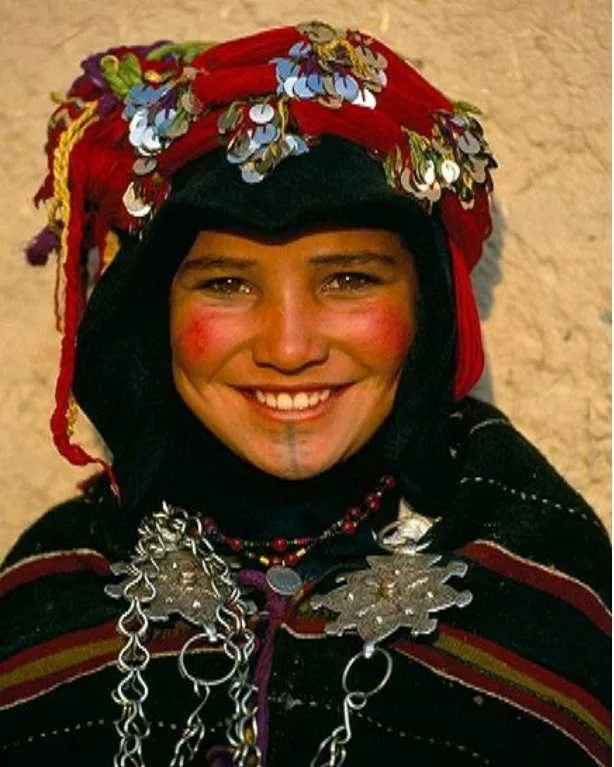
Morocco Imperial Cities Tour
Discover Morocco's Imperial Cities on an Seven-day cultural journey through Casablanca, Rabat, Fez, Meknes, and Marrakech. Designed for travelers interested in Moroccan history, architecture, craftsmanship, cuisine, and living traditions, this classic Sarah Tours itinerary explores the country's royal heritage while revealing the everyday culture that continues around it. Begin in Casablanca with the Hassan II Mosque before traveling to Rabat, Morocco's present-day capital and one of the four historic Imperial Cities. Continue through Meknes and into Fez, whose ancient medina remains one of Morocco's great centers of scholarship, craftsmanship, spirituality, and urban life. The journey then leads south to Marrakech, where palaces, gardens, souks, neighborhoods, and the famous Jemaa el-Fna reveal another expression of Morocco's history and culture. This is not simply a journey from monument to monument. With knowledgeable local guides and time to experience the cities beyond their landmarks, travelers encounter Morocco through the people, traditions, crafts, architecture, food, and stories that give each place its character. Travel on a small-group departure, or personalize the itinerary as a private Morocco cultural tour designed around your own interests, pace, and travel style.
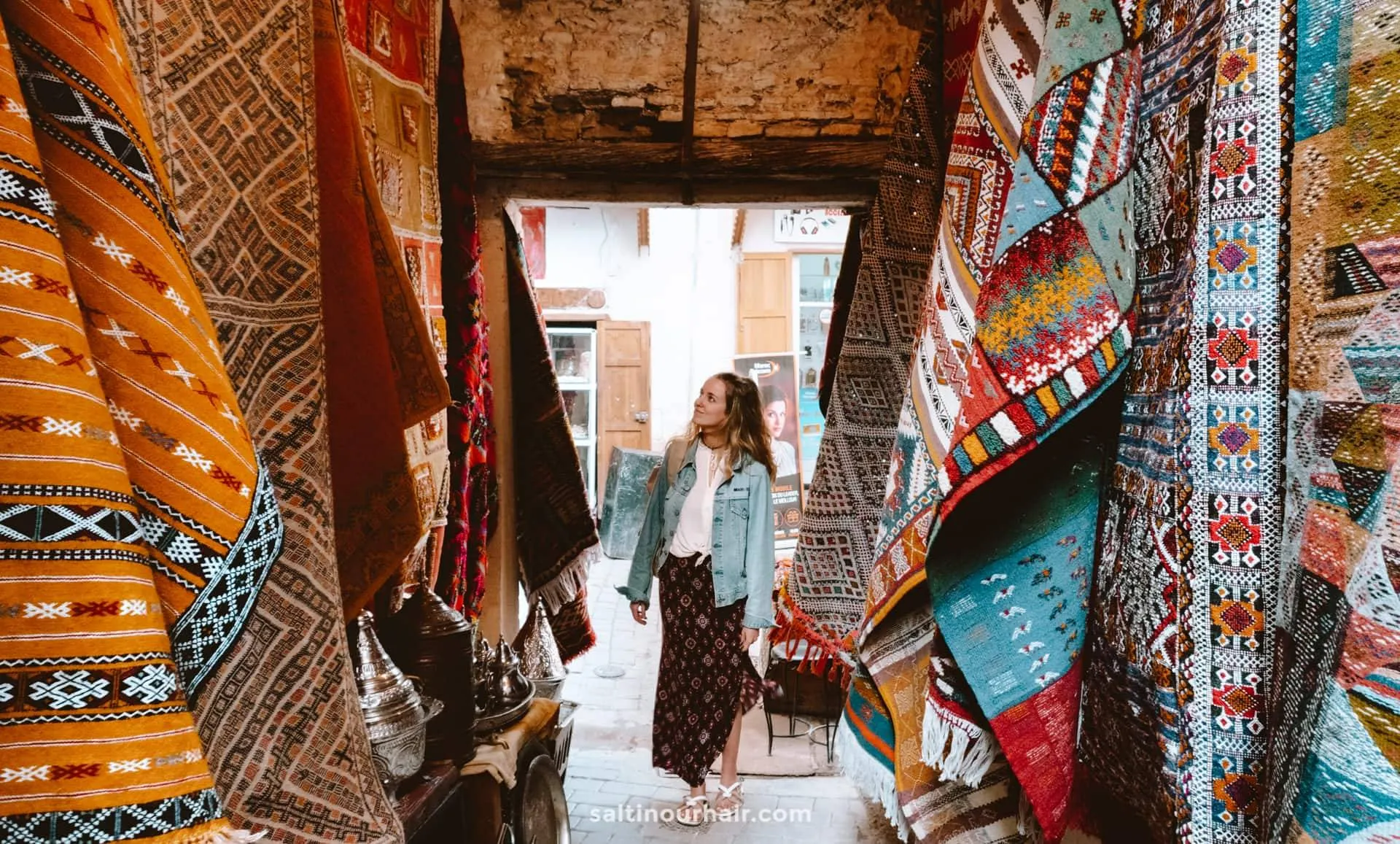
Morocco Atlas Mountains & Sahara Desert Tour
The existing introduction has the right ingredients, but phrases such as “unforgettable,” “breathtaking landscapes,” “authentic Sahara desert camp,” and “beyond the ordinary” are precisely the generic tourism vocabulary we decided to leave behind. I suggest replacing it with: Travel across the Atlas Mountains and into the Sahara on an eight-day journey through the landscapes and cultures of southern Morocco. Designed for active and culturally curious travelers, this Sarah Tours itinerary combines mountain roads, historic kasbahs, palm-filled valleys, desert communities, walking experiences, and time among the dunes of Merzouga and Erg Chebbi. The journey follows the changing geography of Morocco's Great South, where the High Atlas gives way to valleys, gorges, oases, fortified settlements, and eventually the open Sahara. Along the way, encounter Amazigh communities, traditional architecture, agricultural landscapes, historic caravan routes, and the ways people have adapted to some of Morocco's most dramatic environments. At Merzouga, travel into the dunes of Erg Chebbi and experience the Sahara at a slower rhythm. Spend time walking through the desert landscape and experience an overnight desert camp, where sunset, changing light, silence, and the night sky reveal a Morocco very different from its cities. This is more than a scenic journey through southern Morocco. It is an opportunity to understand how geography, water, trade, architecture, agriculture, and human adaptation have shaped life between the Atlas Mountains and the Sahara. Travel as part of a small-group Morocco adventure, or personalize the itinerary as a private Atlas Mountains and Sahara tour designed around your interests, pace, and travel style.
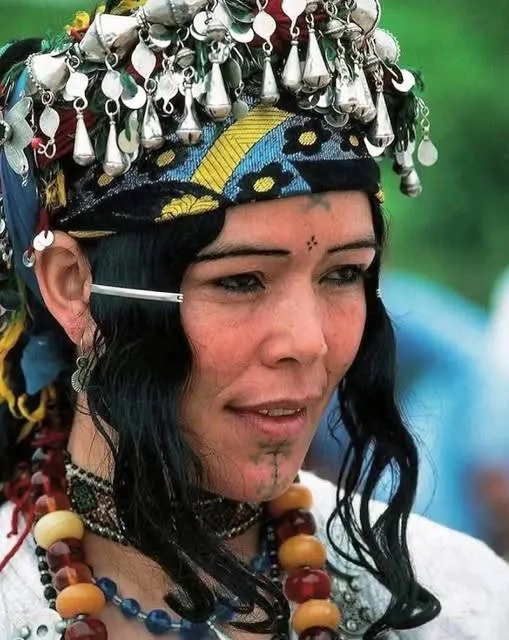
Morocco Cultural & Adventure Grand Tour
Experience Morocco on a 15-day cultural and adventure journey designed to reveal the country's extraordinary diversity of landscapes, communities, history, and ways of life. This comprehensive Sarah Tours itinerary combines historic cities with mountain country, rural communities, oasis valleys, fortified settlements, Saharan landscapes, and the routes that have connected them for centuries. Travel beyond Morocco's best-known monuments to encounter the relationships between people and place. Cross mountain landscapes and agricultural regions, visit local markets and traditional communities, explore historic medinas and ksour, and travel through oasis country where water, climate, architecture, and trade have shaped distinctive ways of living. The journey also explores an important dimension of Moroccan society: the historical relationship between settled and mobile ways of life. Farmers, craftspeople, merchants, pastoral communities, caravan routes, market towns, and cities have never existed in isolation from one another; together, they have contributed to the cultural complexity of Morocco. With fifteen days to travel overland, the journey allows Morocco to reveal itself gradually. Changes in landscape, architecture, food, language, livelihoods, and local traditions become part of the experience rather than simply scenery between destinations. Travel on a small-group Morocco departure, or personalize the itinerary as a private Morocco cultural and adventure tour designed around your interests, pace, and travel style.
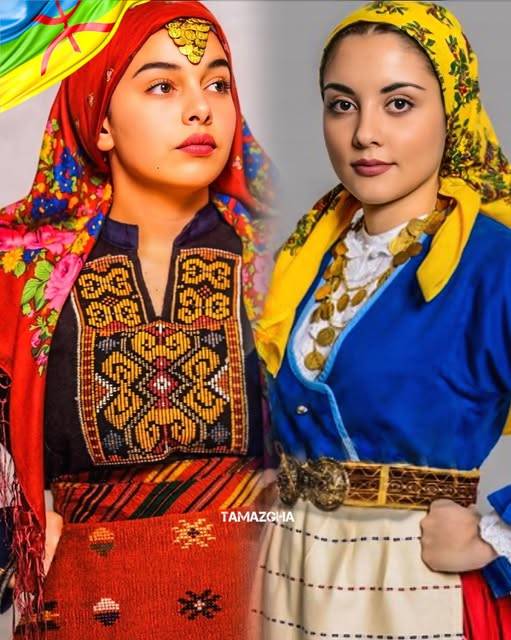
Culture and Music Tour of Morocco
Culture and Music Tour of Morocco Morocco Heard: A Journey Through Rhythm, Memory and Community Morocco can be seen through its monuments, landscapes and cities. But it can also be heard. Music accompanies Moroccan life in ways that are difficult to separate from the life itself. It is present at weddings and pilgrimages, in celebration and mourning, in the courtyard of a home and the square of a village, in the rhythms of work, in poetry, in prayer, and in the remembrance of God. Sometimes music is entertainment; sometimes it carries memory. At other times, it becomes a path toward healing, devotion or transcendence. This cultural and music journey invites you to discover Morocco through these living traditions. Rather than presenting Moroccan music as a collection of performances, we explore the people, communities and histories from which the music emerged. Along the way, we encounter the popular sounds of Chaabi and regional traditions such as Rai and Reggada; the powerful ceremonial worlds of Gnawa, Issawa, Hmadcha and Jilala; and the devotional Samaa and chanting associated with Morocco's Sufi traditions and brotherhoods. In Fez, we enter another extraordinary musical inheritance: Andalusian classical music and Malhoune, where poetry, melody, craftsmanship and memory have travelled together across generations. These traditions carry echoes of the long relationship between Morocco and Al-Andalus and remain part of the living cultural identity of the old city. Beyond the great cities, the journey takes us toward Morocco's regional and Amazigh musical cultures, where landscape, language and community have shaped distinctive rhythms, instruments and forms of expression. In northern Morocco, we also explore the remarkable musical tradition associated with Jajouka, whose sound has travelled far beyond the villages where it was born and attracted generations of international musicians and artists. But this is not a tour in which music is placed on a stage simply for us to consume. Whenever possible, we meet the people who carry these traditions: musicians, singers, instrument makers, teachers and members of the communities in which the music still has meaning. We listen not only to how an instrument sounds, but to what it means, when it is played, who plays it, and why. That distinction is important. A Gnawa rhythm heard as entertainment is beautiful. Understood within its history, spirituality and community, it becomes something more. A Sufi chant can be appreciated for its melody, but its deeper meaning emerges when we understand remembrance, repetition and the spiritual intention behind the voice. Andalusian music becomes richer when we recognize within it centuries of movement between Iberia and North Africa. This is therefore not simply a music tour of Morocco. It is a journey into Moroccan culture through music. Designed for curious travelers as well as musicians, scholars and lovers of traditional music, the journey moves between historic cities such as Fez, Chefchaouen and Marrakech and the rural communities where other musical traditions continue to live. Join one of our small-group departures or ask us to create a private cultural and music journey around your particular interests. We come to listen, to learn, and to meet the people who keep these traditions alive. Why Music? Music tells us things that monuments cannot. A building can tell us how people built, a manuscript what they wrote, and an object what they made. But music brings us closer to what people felt. It carries longing and celebration, faith and memory, sorrow and belonging. It travels from grandmother to child, from village to city, from one generation to another, often preserving what history books forget. In Morocco, music is also a meeting place — between Arab and Amazigh, Africa and the Mediterranean, the sacred and the everyday. To listen carefully, therefore, is not simply to hear Morocco. It is to enter into conversation with its memory. Morocco Heard The musical traditions named in this itinerary are the threads around which our journey is woven, but they are by no means all that we may hear. Morocco does not perform according to an itinerary. Along the way, music may find us in a souk, at a wedding or village celebration, behind an open doorway, or somewhere along the road. These are moments we cannot schedule — and would not want to. When they arise naturally and we are welcome, we join respectfully, sharing for a little while in the life happening around us. Some of the music you remember most may therefore never appear in this itinerary. That is Morocco Heard.
Luxury Tour to Morocco
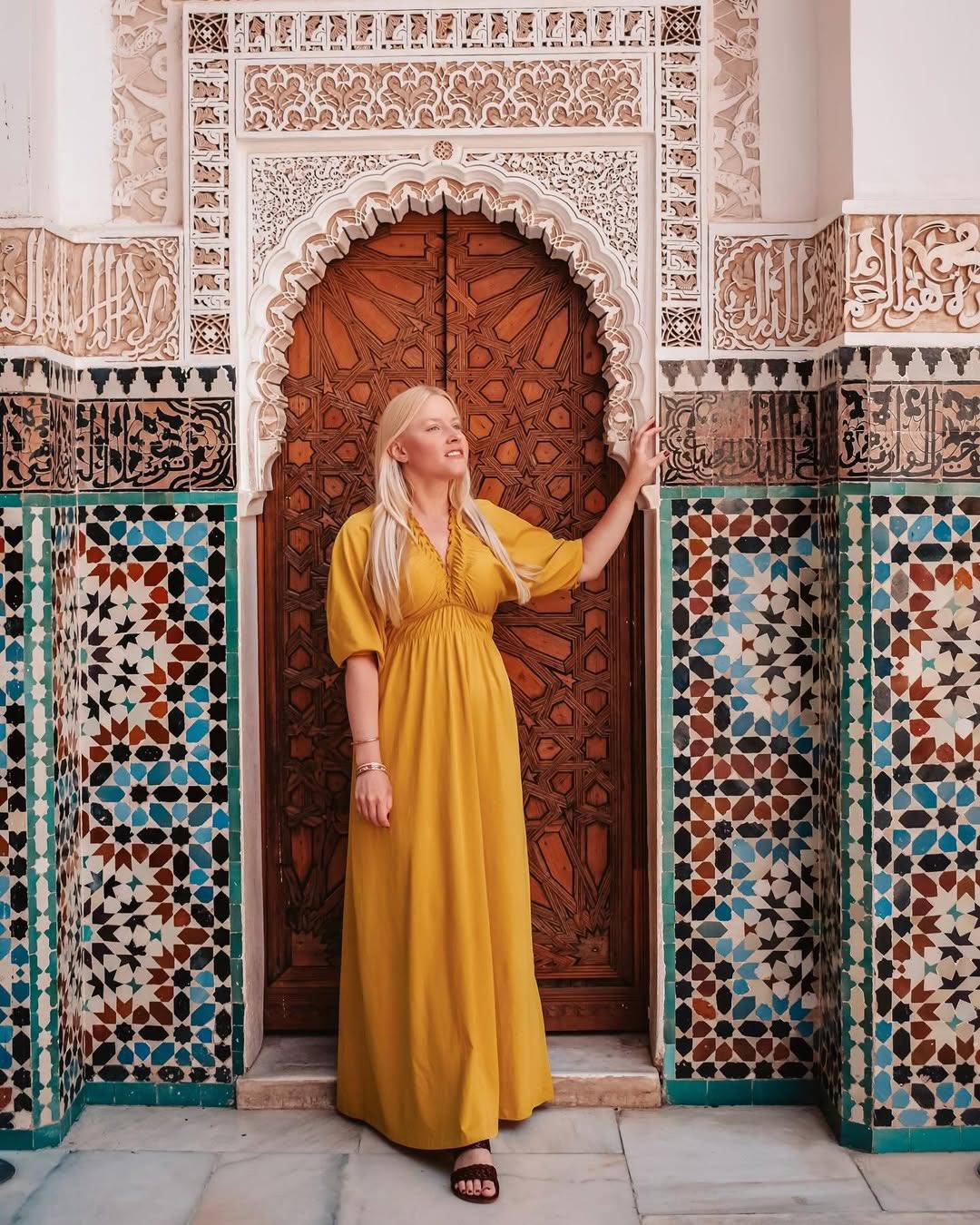
Luxury in Morocco is not only about where you stay. It is about having the time, comfort, access, and personal attention to experience the country well. This 10-day Luxury Morocco Tour brings together some of the country's most beautiful places, distinctive accommodations, refined cuisine, and carefully chosen cultural experiences in a journey designed to unfold at an unhurried pace. Travel by private chauffeured vehicle, stay in exceptional riads, historic residences, and luxury hotels, and explore Morocco with knowledgeable local guides who help reveal the history and living culture behind the places you visit. Along the way, the journey makes room for experiences that are difficult to appreciate when travel becomes a checklist: a traditional hammam, a private cooking experience, encounters with Moroccan art and craftsmanship, memorable meals, and time simply to enjoy the atmosphere of the places in which you are staying. The journey can be personalized around your interests, pace, preferred accommodations, and travel style. Whether your interests lie in architecture, gardens, gastronomy, art, craftsmanship, history, or simply traveling through Morocco with greater comfort and time, we can shape the experience accordingly. For Sarah Tours, luxury is not about separating the traveler from Morocco. It is about creating the comfort, time, and access that allow you to experience Morocco more deeply.
Marrakech express Tour
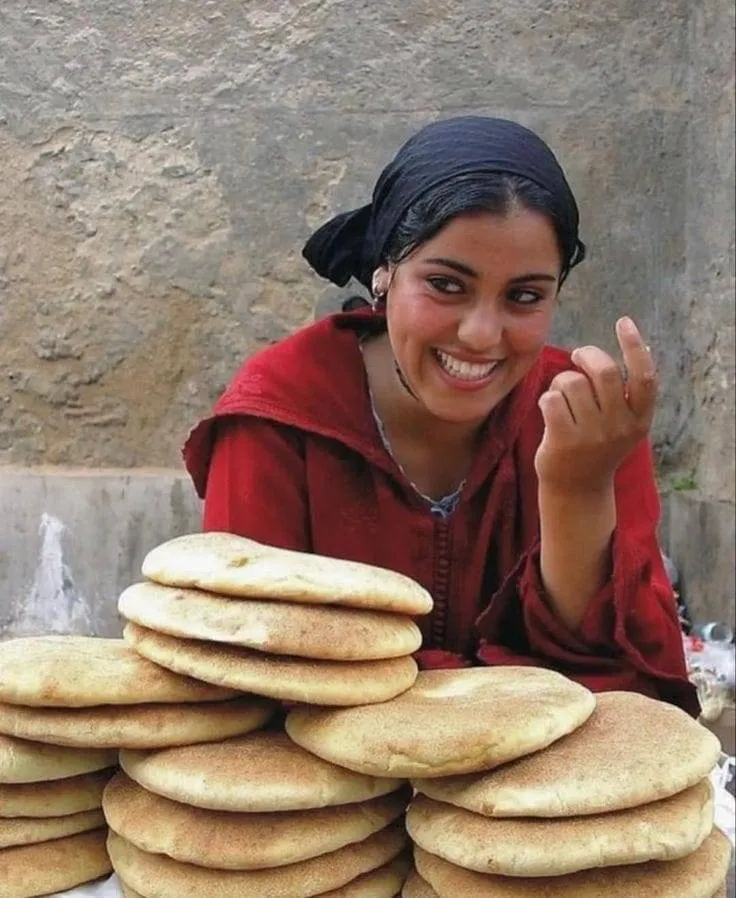
Some journeys are remembered not only for where they take us, but for everything we discover along the way. The 9-day Marrakech Express Tour crosses Morocco from Casablanca and the Atlantic coast through the imperial cities, the Rif Mountains and Tangier before boarding the overnight train south to Marrakech. Inspired by the spirit of the famous Marrakesh Express, this journey celebrates an older pleasure of travel: watching a country change as you move through it. From Casablanca, travel north to Rabat, then inland through Meknes, Volubilis and the sacred hill town of Moulay Idriss before reaching Fez, one of Morocco's great centers of history, craftsmanship, spirituality and learning. The journey then turns north again, crossing the countryside toward Chefchaouen and the Rif Mountains, where landscape, architecture and ways of life reveal another personality of Morocco. Continue to Tangier, the Mediterranean and Atlantic crossroads that for generations attracted travelers, writers, artists and musicians. And then comes the Marrakech Express. After dinner in Tangier, board the overnight train and travel south while Morocco passes beyond the window. Go to sleep in the north and wake the following morning in Marrakech, where gardens, palaces, souks and Jemaa el-Fna bring the journey to its final chapter. Along the way, travel by private vehicle, public coach, on foot and by overnight train. Explore celebrated monuments, but also markets, neighborhoods, landscapes, food, music and the everyday life that exists between them. Because Morocco is not simply a collection of destinations. The distance between them has a personality of its own. The Marrakech Express Tour is designed for travelers who still believe that how we travel can be as meaningful as where we arrive.
Customer reviews
Excellent
13 reviews
Guide
4.8Excellent
Transportation
4.8Excellent
Meals
4.4Very good
Accommodation
4.3Very good
Raymond Harry Barwick · Jun 04, 2025
Sufi Retreat and Healing Tour to Morocco
Excellent itinerary, new car, great driver, great guides who were always on time,spoke English and were very knowledgeable. Considering the accommodation was included it was very good.
Trip date: June 2025
Support Team
Jun 04, 2025
We are glad to hear that you had a wonderful experience in Morocco. We are eager to have you join us for the next trip. Many thanks for your kind words. Hamid Mernissi President,
Jasmine Boudreau · Jun 04, 2025
Three days Tour to Morocco from Spain
We cannot recommend this tour enough. We went into it knowing it would be a great experience, but unsure of exactly how everything would work – we were blown away by the excellent coordination, the amazing guides and the incredible places we saw. Our driver Youssef, was absolutely wonderful - he was friendly, attentive (making sure we were comfortable at all times) and kept us informed every step of the way. He also shared bits of information with us as we drove past places, which was amazing. The van he transported us in was spotless and had great air conditioning which he made sure was to our liking - he was very professional and made sure we were able to take breaks to eat or use the restroom. He also coordinated with the guides at each location so incredibly well - we literally never had to wait even 30 seconds to meet our guide or get picked up, which would have been understandable! The coordination was so seamless, we were very very impressed. Youssef really made this adventure that much more enjoyable and we could tell he puts a lot of care into his role - it was very much appreciated and noticed!! He even made sure to stop the car a few times at amazing viewpoints so we could take photos; the views he stopped at were breathtaking. Youssef also had great communication with us and would check in on what time we wanted to get started in the morning, etc - the activities were all planned but we still had a say in certain things, which was so nice as it gave us some flexibility. Our guides, Mjit and Mohammed, were amazing as well - they made sure not to go too fast and shared so much interesting information with us. Mjit was our guide at Volubilis and was so friendly and extremely well-informed; it was an amazing guided tour. He made sure we got beautiful pictures and answered all our questions. The site itself is incredible on its own, but having him as our guide made the experience so much better. Mohammed guided us through Fes and coordinated with Youssef to get us to and from different areas; our favourite part was getting guided by him through the medina, it was simply magical. It’s impossible to describe the amazing things we saw – the ceramics workshop, the tannery, the food and spices, the craftsmanship - you will see the most beautiful artisanal work of your life. Mohammed was also super friendly, answered all our questions and had an amazing knowledge of the city, country, and everything we saw. What made the experience even better was that we were never rushed and could choose what to see. The accommodations were great, we were very comfortable and had good meals and slept very well. The staff at the hotel were very friendly, professional and attentive and clearly had a great relationship with the tour/guides. We felt very well taken care of the entire tour and could not have asked for anything better. This was the experience of a lifetime and we are so grateful to everyone involved – we HIGHLY recommend this tour!!
Trip date: June 2025
Support Team
Jun 04, 2025
Thank you so very much for your kindness. We live to hear such great comments from our guests. Everyone at Morocco Discoveries, Inc. is grateful to you. You were a gracious guest. Thank you again. Hamid Mernissi Manager.
Judy Rufuerzo · Jun 04, 2025
Morocco Cultural & Adventure Grand Tour
Great trip to Morocco. Miloud our driver was the best and took great care of us. It was awesome to have wifi in the car on the long driving days. I was surprised by our tent in the desert, it had all the comforts: sink, shower, toilet, and beds. Miloud always found us great lunch stops and two of us didn't eat meat so he always made sure there were food options for us. There is no way I could have experienced all that we did in Morocco without this great tour. We had specialized guides in each location and they were also good and took care of us, especially on the mild hike day that was actually quite scary and hard for me. Wonderful experience, love Morocco and Miloud.
Trip date: May 2025
Support Team
Jun 04, 2025
I appreciate your kindness. You were great guests as well. You will always be welcome in Morocco. All of Morocco Discoveries staff are at your disposal. Many thanks, Hamid Mernissi
Penelope Foudoulis · Jun 04, 2025
Three days Tour to Morocco from Spain
Great service. We missed our flight into Tangier and had to change our plans last minute. They were very accommodating and adjusted the tour to meet us in Fes. All the guides were lovely and the driver took great care of us. Very grateful and a wonderful experience :)
Trip date: June 2025
Support Team
Jun 04, 2025
Thank you for your kind words. Morocco Discoveries will always be at your disposal. Gratefully, Hamid Mernissi
Morocco articles
Before You Visit Morocco: Read The Boy from Fez
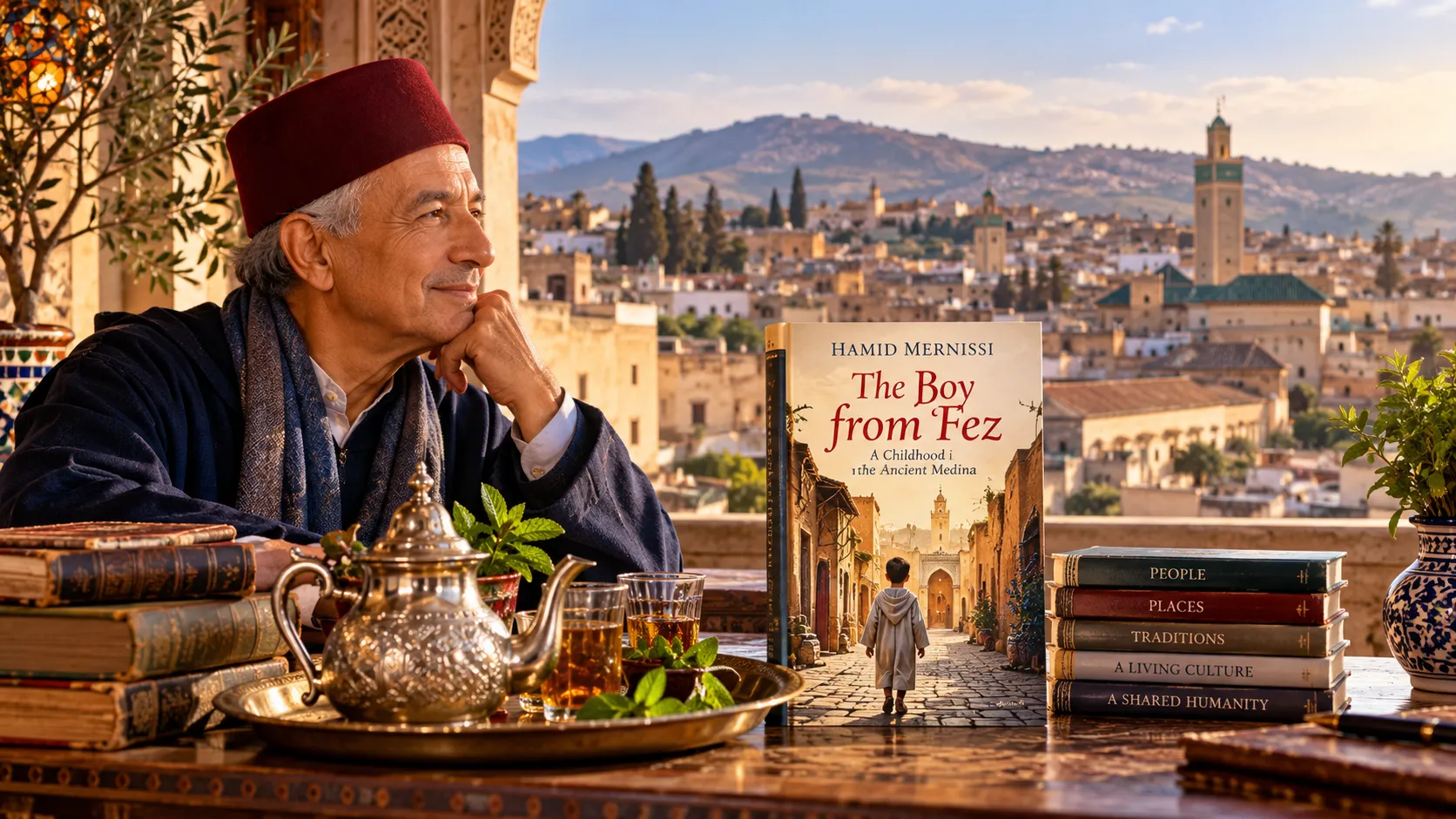
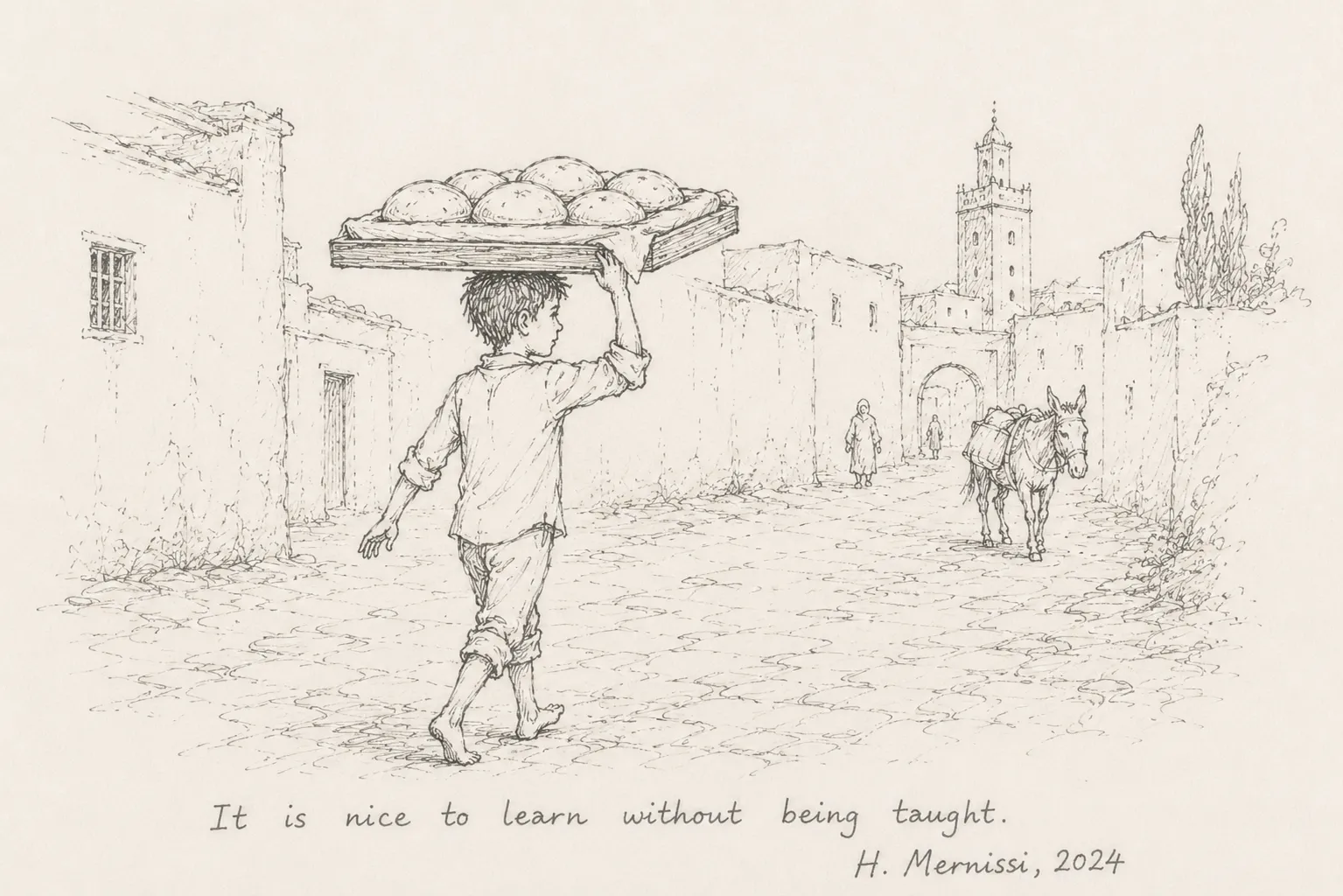
Before You Visit Morocco, Read The Boy from Fez: Discovering a Civilization from Within For centuries, Morocco has been visited, painted, photographed, studied, and described by people from around the world. Yet I have often wondered: how frequently have we listened to Morocco telling its own story? I was born in Fez, among craftsmen, storytellers, musicians, grandmothers, and ordinary people whose extraordinary wisdom shaped my childhood. Many years later, after studying anthropology and travelling across the world, I realized that my first and greatest classroom had been the streets, homes, and orchards of my own city. That realization inspired me to write The Boy from Fez. This book is not simply a memoir of my childhood. It is an invitation to discover Moroccan civilization from within, through the lives of the people who made it what it is. I wrote it for travellers who wish to understand Morocco before visiting, for Moroccans who wish to reconnect with their cultural inheritance, and for readers everywhere who recognize that our human experiences connect us across borders. Because I believe something deeply: Everyone has a Fez of their own. My Fez may be different from yours, but somewhere in our childhood memories, our families, our friendships, and the places we call home, we may discover how much humanity we share. Today, I invite you to read my new reflection: The Boy from Fez: Morocco, Told from Within Read the full article: [https://hamidmernissi.com/blog/the-boy-from-fez-morocco-told-from-within] With gratitude to everyone who has accompanied me on this journey. Hamid Mernissi
Chiadma Morocco: Amazigh Origins, Regraga & History
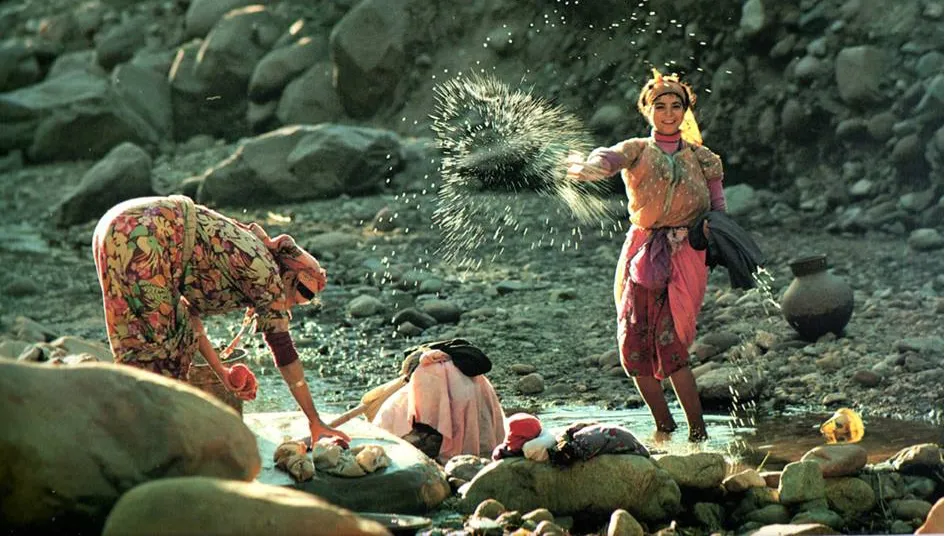
The Chiadma of Morocco: Where Genealogy Meets Memory Subtitle: Between Masmuda ancestry, Regraga spirituality, and the Atlantic plains of Essaouira, the story of Chiadma refuses to fit neatly into a single family tree. And I would rewrite it this way: The Chiadma of Morocco: Where Genealogy Meets Memory Travel north from Essaouira toward Safi and the landscape begins to tell a quieter story of Morocco. The Atlantic remains somewhere to the west. Inland stretch plains, villages, fields, and the sacred geography of the Regraga. This is Chiadma country, a land whose identity has been carried not only through written history, but through genealogy, pilgrimage, tribal memory and generations of belonging. But ask a seemingly simple question, Who are the Chiadma?, and history answers with several voices. Some old genealogical traditions place the Chiadma among the great Masmuda Amazigh confederation of western Morocco. Other writers associated them with Zenata or Butr ancestry. Still other accounts describe a population formed over centuries through the meeting and incorporation of Amazigh and Arab tribal elements. Perhaps the disagreement tells us something important about Morocco itself. A tribe is not always a branch that can be followed neatly back to a single trunk. Sometimes it is a river. An Old Amazigh Genealogy One tradition identifying Chiadma with the Masmuda is preserved by Abu Muhammad Abd al-Salam al-Qadiri, drawing on an older genealogical source attributed to Muhammad ibn Abi al-Majd al-Masmudi. In that genealogy, Chiadma appears among Masmuda groups alongside names such as Jazula, Haha, Regraga, Ourika, Hintata and Doukkala. Other Moroccan genealogical traditions followed a similar path. Al-Zammuri, cited by Al-Taqi al-Alawi in Usul al-Maghariba, associated Chiadma with Ourika and Ghigaya and described them as sharing an Amazigh ancestry. Yet medieval genealogy was rarely unanimous. Ibn Juzayy placed Chiadma differently, associating them with Zenata, or more broadly with the Butr Berbers, and tracing their ancestry through Satafur ibn Matmat. Other genealogical traditions ultimately linked this lineage to Madghis ibn Barr, one of the great ancestral figures in accounts of Amazigh origins. Such contradictions were hardly unique to Chiadma. Historians and genealogists also disagreed over how to classify other important North African peoples. The disagreement should therefore not be treated as a historical inconvenience. It is part of the history. Regraga: A Deeper Memory of the Land One element of the story is considerably clearer: the ancient presence of the Regraga. Modern linguistic scholarship notes that before Arab tribal migrations into the region, the territory itself was known as Regraga. The Regraga are identified as an Amazigh group belonging to the Masmuda and were subsequently incorporated into the wider Chiadma population. Their presence survives in something more powerful than genealogy: ritual. Every spring, the Regraga Daour carries pilgrims through a sacred landscape of shrines and communities in the Essaouira region. Whatever one makes of the legends surrounding its earliest origins, the pilgrimage remains a living expression of the region's religious memory. Contemporary historical discussion distinguishes the spiritual legend of the Seven Saints from demonstrable history while recognizing Regraga's deep importance in Chiadma's religious life. Here history is no longer merely something written in a manuscript. It walks. It visits. It remembers. When Tribes Become Landscapes By the sixteenth century, European observers were also attempting to describe the peoples inhabiting western Morocco. Luis del Mármol Carvajal wrote about Chiadma and the populations of the wider Doukkala and Haha regions, although interpreting these early European categories requires caution. Modern scholarship likewise complicates any simple declaration that today's Chiadma descend exclusively from one ancient confederation. Some Moroccan historical traditions describe Arab tribal components, including groups associated with Mudar, al-Harith and Maqil, alongside the Amazigh Regraga and Maskala. That does not erase Chiadma's Amazigh history. Nor does Amazigh ancestry erase centuries of later migration, intermarriage, alliance, Arabization, and cultural exchange. It reminds us instead that Moroccan identity was lived before it was classified. The historian wants a genealogy. The people inherit a landscape. Chiadma Beyond the Family Tree Perhaps this is why I find Chiadma more interesting when we stop asking only, Which branch did they belong to? Look instead at what survived. The sacred geography of Regraga. The villages between Essaouira and Safi. The pilgrimage routes. Agricultural life. Oral memory. Saints and sanctuaries. Amazigh inheritances alongside later Arab influences. Communities that absorbed newcomers without forgetting what came before. The modern Chiadma territory lies along Morocco's Atlantic side north of Essaouira, while scholarship places the older Regraga landscape in this same region. That landscape has witnessed dynasties rise and disappear, languages change, tribal alliances shift, and genealogists disagree. Yet the people remained. Perhaps that is the lesson Chiadma offers the traveler. Identity is not always a straight line drawn backward through blood. Sometimes it is a place where many memories learned to live together. And in Chiadma, Morocco has been remembering for a very long time.
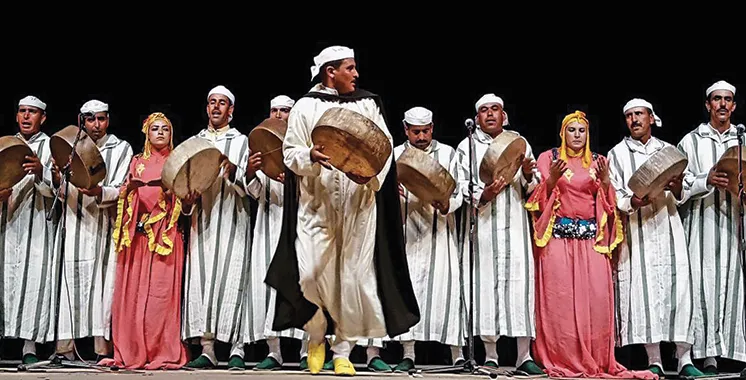
A Tour or a Journey?
A Tour or a Journey? Two Ways of Discovering Morocco When I began designing travel programs to Morocco in the early 1990s, I rarely thought of them as tours. I called them journeys. Perhaps I did not fully understand at the time why that word felt so natural to me. I simply knew that I wanted travelers to encounter something beyond monuments, hotels and beautiful landscapes. Some of my earliest programs were spiritual journeys. We explored Morocco through Sufi traditions, sacred music, and encounters with communities for whom spirituality was still woven into everyday life. Later, we traveled into Morocco's Jewish heritage, including visits connected with Hiloulas and the memory of saints whose resting places continue to bring people together. The purpose was never simply to reach these places. I wanted to understand what they meant. More than thirty years later, I find myself returning to that word: journey. Not because there is anything wrong with a tour. There isn't. A well-designed tour can be a wonderful way to discover Morocco. A first-time visitor may wish to experience Fez, Marrakech, the Sahara, the Atlas Mountains and Morocco's great historic sites while travelling comfortably and in knowledgeable hands. We will continue designing such tours. But another kind of traveler asks another kind of question. They are not only asking: Where are we going? They are asking: Why are we going there? That small difference can change the entire travel experience. A Tour Organizes Places. A Journey Organizes Meaning. A tour needs an itinerary. So does a journey. Both require good hotels, reliable transportation, knowledgeable guides, thoughtful logistics and careful planning. The difference is not necessarily what appears on the map. The difference is what connects the places. A journey begins with an idea, a question, or sometimes simply a curiosity. Imagine travelling through the mountains of southern Morocco. We could visit villages because they are beautiful. We could photograph houses clinging dramatically to the slopes and continue along our road. Or we could stop and ask: Why was the village built there? Suddenly the landscape begins to open. Perhaps the flatter ground below was too valuable for agriculture to cover with houses. Perhaps water determined where people could settle. Perhaps building materials came directly from the mountain. Perhaps the architecture reflects climate, security, agriculture, and generations of accumulated knowledge. The village has not changed. We have. We are no longer simply looking at it. We are beginning to read it. That is the territory of the journey. Knowledge Gives the Journey Its Thread A journey cannot simply be assembled from attractive places. It must be conceived. The itinerary is not the journey. The idea running through it is. On one journey, we might follow music through Morocco and discover how rhythm, spirituality, migration and community have shaped different musical traditions. On another, we might follow water and discover how mountains, irrigation, agriculture, architecture and human cooperation are connected. We might travel through the green highlands following olive, fig and cedar, allowing vegetation and altitude to tell us where we are. Or we might enter the Anti-Atlas asking how Amazigh communities learned to make homes, farms and villages within an environment that does not give easily. This kind of travel requires knowledge. History matters. Geography matters. Anthropology matters. Agriculture, architecture, religion, music and ecology matter. But experience matters too. You have to spend time in a place. You have to listen. You have to know when something belongs in the journey and, equally importantly, when it does not. A journey has an author, but the traveler should never become a captive of the author's conclusions. Our responsibility is to create the road, provide context, open doors when they can be opened respectfully, and ask worthwhile questions. We design the road. We do not prescribe what you must find at the end of it. Walking Is Sometimes Our Way of Getting Closer This philosophy also changes the pace of travel. Sometimes we walk. Not because every journey must become a trekking expedition, and certainly not because a mountain is waiting to be conquered. We walk because the windshield separates us from things. A terrace looks different when you stand beside the wall somebody built to hold its soil. An irrigation channel becomes meaningful when you follow the water. A market becomes different after you have visited the farms and villages whose produce arrives there. A zawiya becomes more than architecture when you begin to understand why generations of people travelled to it. Walking slows the traveler sufficiently for relationships to become visible. Walking is how we get closer. People Are Not Attractions Another responsibility comes with journey travel. The people we encounter are not part of the scenery. A shepherd does not exist for our photograph. A musician does not become more authentic because we have paid for a performance. A rural family should not have to demonstrate its culture because an itinerary promised travelers an “authentic encounter.” Life has its own rhythm. Pastoral life follows grass, water, weather, and season—not our itinerary. If a conversation happens naturally, we welcome it. If a family opens its home, we enter gratefully. If music arises from an occasion to which we have genuinely been welcomed, we listen differently. A meaningful journey requires curiosity, but it also requires humility. We arrive as guests. The Mountains Meet the Market One of the pleasures of journey travel is discovering relationships where we previously saw separate things. A mountain village and a city souk may appear to belong to different worlds. They don't. The farmer needs the market. The artisan needs materials. The merchant depends upon producers. The city depends upon its countryside, while rural communities depend upon towns as places of exchange. Suddenly the souk is no longer merely colorful. It becomes a conversation between places. Follow those relationships far enough and even a great city begins to look different. After travelling through Amazigh villages, agricultural terraces, mountain passes and rural markets, we recently arrived at Marrakech with a simple realization: We had entered Morocco through the back door. Instead of beginning with the city and making excursions into the countryside, we travelled through the countryside until we began to understand the city. The mountains had entered Marrakech before us—in its food, materials, craftspeople, markets, water, histories and human relationships. Tour or Journey? The Choice Is Yours. I do not believe that one way of travelling is better than the other. They are two different invitations. A tour says: Come, let us show you Morocco. A journey says: Come, let us explore something about Morocco together. Perhaps you are visiting Morocco for the first time and want to discover its great cities, landscapes and historic places. A thoughtfully designed tour may be exactly what you need. Perhaps you have travelled extensively. You have seen many beautiful places already, and now you are looking for context, conversation, and a deeper understanding of the places through which you travel. Then perhaps you are ready for a journey We create our journeys especially for travelers who remain curious after seeing much of the world. They are not necessarily more difficult. They are not necessarily longer. They simply begin with a different intention. Returning to Journeys After more than three decades in travel, Sarah Tours is returning to what was there from the beginning. We are bringing journeys back to the heart of what we do. Not as a new marketing expression. Not as a replacement for our tours. And certainly not because we wish to tell travelers how they ought to travel. We simply want to offer a choice. Because I have come to believe that: A tour organizes places. A journey organizes meaning. A tour shows you where to go. A journey changes the way you see where you have been. And perhaps most importantly: A tour can end at the airport. A journey sometimes begins there. Long after the suitcase has been unpacked, a question may remain. A piece of music may sound different. A market may remind you of the farmer behind it. A glass of water may bring back a mountain spring. A cedar tree, a zawiya, an old Jewish cemetery or a village clinging to the rock may suddenly connect with something you did not understand while standing in front of it. The journey continues because something has travelled home with you. At Sarah Tours, we will continue to create both tours and journeys. The choice belongs to you. Would you like us to show you Morocco? Or would you like to explore something about Morocco with us? One may become a wonderful tour. The other may become a journey. Travel in peace — Ma'a Salama. By Hamid Mernissi
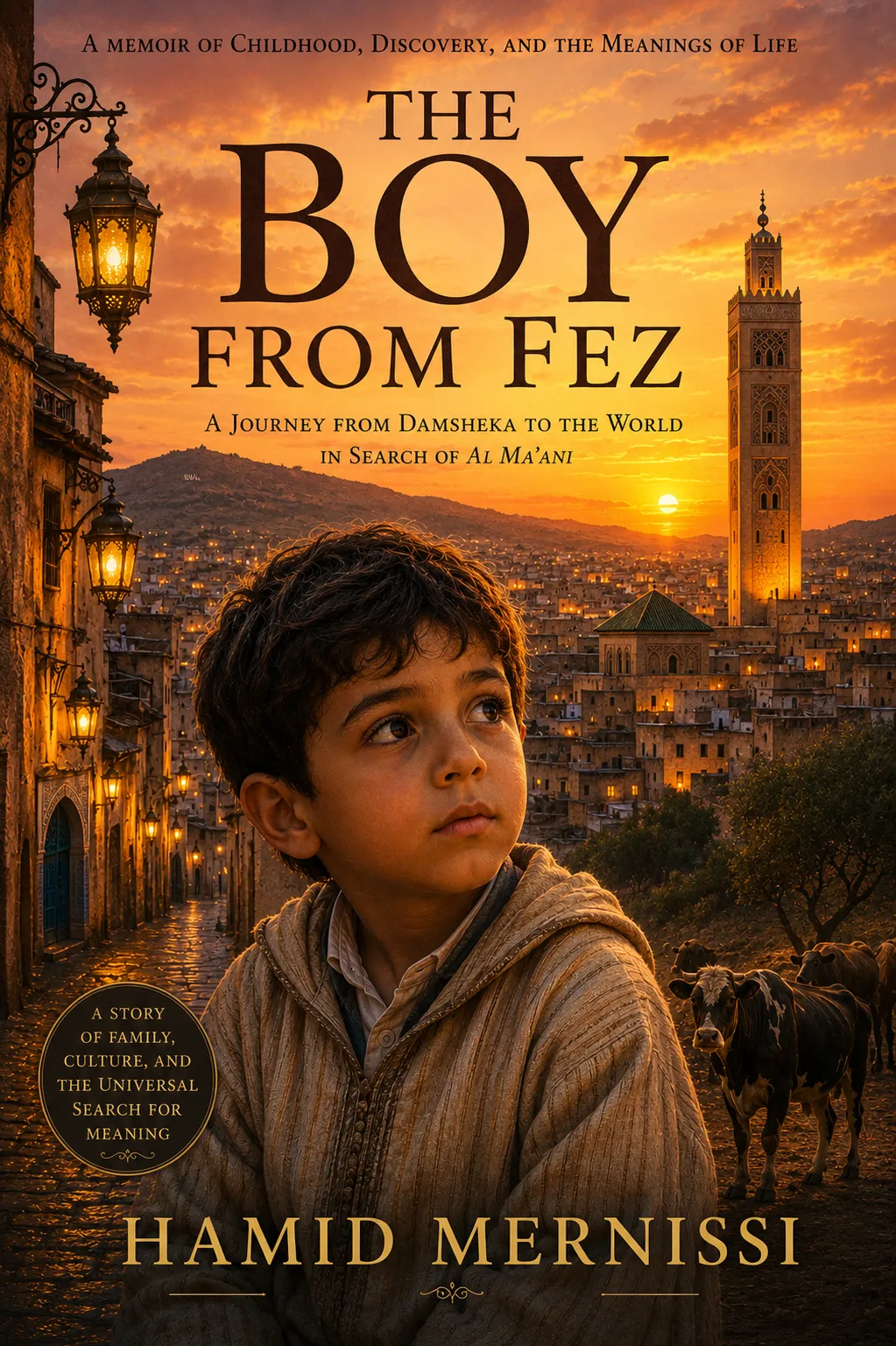
Before Sarah Tours, There Was a Boy from Fez
Long before there was Sarah Tours, there was a boy growing up in Fez. He learned about Morocco before he knew that one day he would spend his life explaining it to travelers. His classrooms were not always classrooms. They were the streets of the medina, family houses, the orchard at Ben Tato, the Fez River, neighborhood workshops, religious gatherings, markets and the company of people whose knowledge rarely appeared in books. More than thirty years ago, when I began taking travelers through Morocco, I thought I was introducing them to my country. Looking back, I understand that I was often introducing them to the Morocco that had introduced itself to me as a boy. On October 15, I will publish my first book, The Boy from Fez. Perhaps this book also explains something about Sarah Tours. I have never known how to separate a place from its people, its history from its daily life, or a monument from the civilization that produced it. When I design a journey, I still find myself looking at Morocco with some of the curiosity of that boy from Fez. Travel became my profession, but curiosity came first.

Travel Marketplace and Market
When the Marketplace Becomes the Market I have spent most of my professional life in travel. Long enough to remember when selling a journey depended largely upon relationships. A tour operator created a journey. A travel agent knew the client. A destination specialist knew the country. Hotels provided accommodation. Guides interpreted the destination. Drivers moved people safely through it. Restaurants fed them. Local suppliers provided countless services along the way. And somewhere between all these people stood a traveler who trusted us collectively with something precious: his money, certainly, but also his time, his safety, and his dreams. It was never a perfect system. Business never is. Everyone needed to earn something. Commissions, wholesalers, negotiations, preferred suppliers, and large companies with greater buying power than small ones. But a recognizable chain of professional responsibility existed. We knew who did what. The travel agent did not pretend to be the hotelier. The hotelier did not pretend to be the guide. The wholesaler did not drive the coach. The destination operator knew that when the traveler arrived, the responsibility became very real. Travel was a trade. And like every trade, it had its maâlems. Then technology arrived. I welcomed it. Why wouldn't I? Technology gave a small company access to the world. A tour operator in Morocco could present a journey directly to someone sitting in Sydney, Toronto or Chicago. Information that once required brochures, telephone calls, postage and international offices could suddenly cross the world in seconds. This was extraordinary. For the small operator, the promise seemed almost democratic: The distance between producer and consumer was disappearing. But something unexpected happened along the way. A new intermediary appeared between them. The platform. The New Marketplace There is nothing inherently wrong with a platform. A good marketplace performs a valuable function. It gathers choices. It makes products searchable. It facilitates comparison. It can provide reviews, payment systems, technological infrastructure, and consumer confidence. It can introduce a small operator to a traveler who otherwise might never have discovered them. For doing this work, it deserves to earn money. I have no quarrel with that. My question begins somewhere else. What happens when the marketplace becomes more powerful than the people who actually produce what is being sold there? That is not merely a question about travel. It is a question about the architecture of modern commerce. There was a time when an intermediary approached the producer and essentially said: I can bring you customers. What arrangement can we make? Increasingly, the relationship can feel reversed: I control access to customers. These are the conditions under which you may reach them. Something fundamental has changed. The marketplace has begun becoming the market. Visibility Is Not the Same as Quality Imagine a traditional souk. One maâlem has spent forty years mastering his craft. Another has been working for ten. A third has only recently opened his workshop. People walk through the market, examine their work, speak with them, ask questions, and eventually decide whom they trust. Now imagine that someone builds the only entrance to the souk. He does not make anything sold inside it. But he decides who stands nearest the entrance. He decides which workshop appears first. He decides the conditions under which craftsmen may participate. And perhaps those who contribute most to the cost of visibility become the easiest to find. Eventually the visitor may begin believing that the craftsmen nearest the entrance must be the best craftsmen. But they may simply be the most visible. Visibility and mastery are not the same thing. This distinction matters enormously in travel. A traveler searching online may reasonably assume that the tours appearing most prominently are among the best choices available. But digital visibility can depend upon many things besides destination knowledge: advertising budgets, commercial agreements, sales volume, conversion rates, rankings, algorithms, and the ability to participate economically in a platform's system. None of those things necessarily tells us who knows Morocco best. Or Kenya. Or Peru. Or India. The algorithm measures what it was designed to measure. It cannot automatically measure wisdom. Where Did the Professional Go? This is what troubles me most. Travel is not simply inventory. A hotel room can be described by square meters, facilities, and location. An airline seat can be identified by route, class, and departure time. But a journey is something else. A good journey is composed. Someone decides what belongs and what does not. Someone understands rhythm. Someone knows when three nights are necessary rather than two. Someone knows that the famous attraction may be less meaningful than the village thirty kilometers away. Someone understands that a road appearing shorter on a map may be the wrong road for the experience. Someone knows when to speak. And, perhaps more importantly, when to stop speaking and allow the traveler to experience the place. That knowledge takes years. I call it craftsmanship. The maâlem of travel does not merely assemble hotels, transportation, and excursions. He understands relationships. Geography and history. Water and settlement. Landscape and architecture. Food and agriculture. Religion and daily life. Trade and migration. People and place. That is what creates a journey. Yet the modern marketplace can reduce all this to another product card: 22 Days — Morocco — From $X — Book Now. The craft remains underneath. But the shelf becomes more visible than the craftsman. Apples Do Not Grow on Shelves In another reflection, I used the simplest analogy I could find. Apples do not grow in supermarkets. Somewhere there is an orchard. There is soil. Water. A tree. A farmer. Knowledge. Labor. Risk. Time. The supermarket performs an important function after all these things have produced the apple. Travel is no different. The platform did not create the mountain. It did not build the relationship with the village. It did not train the guide. It did not inspect the hotel. It did not drive the road. It did not sit with the family that welcomes travelers. It did not spend thirty years learning why one itinerary works and another merely looks good on paper. Someone else did those things. The platform provides access to the apple. We should not forget the orchard. The Economics of the Doorway This brings us to the uncomfortable question of economic power. Every intermediary deserves to be paid for the genuine value they contribute. But what determines that value? Is it the work performed? The expertise contributed? The risk carried? Or increasingly, the power that comes from controlling access to the customer? These are different things. The person controlling the doorway may eventually earn more from the transaction than some of the people producing what lies behind the door. Perhaps the market accepts this. But acceptance doesn't stop us from asking whether the relationship is healthy. Because the producer has expenses that cannot be virtualized. The guide must be paid. The driver must be paid. Fuel must be purchased. The hotel must be paid. Meals must be served. Staff must be employed. Insurance, offices, training, and administration remain. And when something goes wrong during the journey, somebody on the ground must solve it. The journey eventually leaves the screen. Travel becomes physical. That is the moment when the difference between selling travel and operating travel becomes unmistakable. Why Can't We All Be Strong? I am not interested in reversing the hierarchy. I do not want the small operator to become powerful by making the platform weak. That would reproduce the same mistake. My question is: Why can't we all be strong in a fair share? The platform can prosper. The travel agent can prosper. The tour operator can prosper. The hotel can prosper. The guide can prosper. The driver can prosper. The local community can prosper. And the traveler can receive genuine value for the money invested. Surely the purpose of a healthy economy is not to determine who can extract the most from everybody else. It is to create conditions in which useful contributions can coexist. The oasis taught me this better than any business school could. The person upstream needs water. So does the person downstream. The answer is not to deprive the person upstream. It is to prevent access from becoming absolute entitlement. Because if the first person takes everything simply because he can reach it first, eventually there is no garden downstream. Markets have downstream gardens too. The Consumer Has a Place in This The traveler is not responsible for repairing the economics of the travel industry. But travelers deserve to understand what they are buying. Booking through a marketplace is not wrong. Convenience has value. Security has value. Comparison has value. But consumers should also be able to ask: Who actually operates my journey? Who designed it? Where are they based? How long have they worked in the destination? Who employs the guides and drivers? Who carries responsibility when I arrive? Can I speak directly with the people who actually know the journey? And perhaps: How much of the money I spend stays with the people creating the experience? These questions are not anti-business. They are responsible consumption. We encourage people to ask where their food comes from. We ask who made our clothes. We increasingly want to know how products affect the environment. Why should travel be exempt? Responsible tourism should begin before the traveler reaches the destination. It begins with understanding the journey between the dollar and the destination. Technology Can Still Fulfill Its Promise I am not nostalgic for a world without technology. I do not want to return to telex machines, printed tariffs, and shelves of brochures. Technology has given us extraordinary possibilities. And perhaps the next stage can correct some of the imbalances created by the first. Search can become better at recognizing genuine expertise. Artificial intelligence may help travelers discover specialists who previously could not afford global marketing. Technology can make reputation portable. It can allow the smallest maâlem to present his knowledge directly to the world. Perhaps the future does not belong inevitably to bigger platforms. Perhaps it belongs to better connections. The internet's original promise was not that a handful of enormous marketplaces would own the road between human beings. Its promise was connection. I still believe in that promise. The Market Is a Relationship After decades of travel, I have reached a simple conclusion. A market is not a machine. It is a relationship. Someone produces. Someone distributes. Someone advises. Someone purchases. Someone delivers. Someone receives. Each depends upon the others. When one participant becomes so powerful that the others lose meaningful choices, the relationship changes. And eventually the profession changes with it. I have lived long enough in this trade to remember another way. I have also lived long enough to know that we cannot simply recreate the past. Nor should we. The answer lies ahead. But whatever future we build, I hope we remember four simple things: The apple teaches us source. The maâlem teaches us skill. The oasis teaches us fair share. The Amine teaches us responsibility. Perhaps my responsibility now, after a lifetime in the travel business, is simply to say what I have seen. Not to attack. Not to complain. Not to ask anyone to surrender what they have legitimately earned. But to give a voice to a profession I love. The marketplace has an important place in travel. So does the maâlem. Let us make sure that, as we build ever larger marketplaces, we do not accidentally build a world with no room left for the people who actually know how to make what the marketplace sells.
Private Travel in Morocco
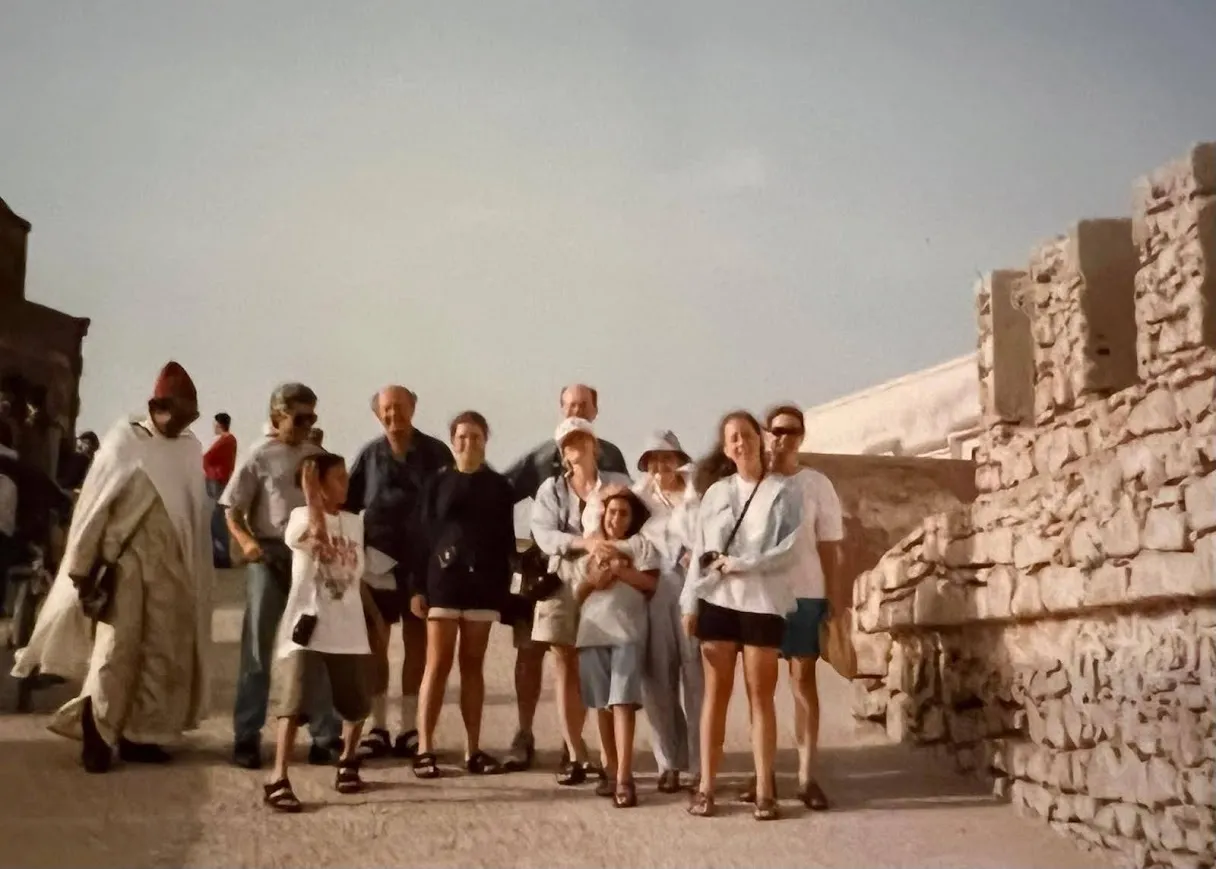
What 30 Years of Customized Morocco Tours Have Taught Me I have been designing private and customized journeys through Morocco for more than thirty years. During that time, I have probably created more than a thousand individual itineraries. Some I barely remember. Others have never left me. What I remember most is rarely the hotel we used or how many nights we spent in Marrakech. I remember the people: families travelling across three generations, couples celebrating important moments in their lives, travelers tracing their heritage, people fascinated by architecture or music, adventurous travelers wanting mountains and desert, and others who simply wanted enough time to sit somewhere and understand where they were. After all these years, I have learned something very simple: A customized tour does not begin with the itinerary. It begins with the traveler. Fourteen People, One Family, Fourteen Different Travelers One of my earliest lessons came in 1994, when Sarah Tours was still a young and largely unknown company. Mr. Johnson asked me to design a grand tour of Morocco for his family. Fourteen participants ranged in age from nine to seventy-three. At first glance, this was one private group requiring one itinerary. It wasn't. It was fourteen people experiencing Morocco differently. Children can become fascinated very quickly, but they can also become bored just as quickly. A long historical explanation that captivates a grandfather may mean very little to his nine-year-old granddaughter. Teenagers present another challenge. You cannot simply drag them through monuments and expect enthusiasm because the adults have declared the places important. They need opportunities to participate, discover, move and develop their own relationship with the destination. Adults may happily endure longer driving days, extensive walking and detailed cultural visits. Older travelers often still possess the curiosity and adventurous spirit they had decades earlier, while their bodies may quietly ask for a different pace. My responsibility was not to decide which generation should compromise. It was to create a journey where everyone belonged. For fifteen days, we travelled through Morocco's imperial cities, mountains and Sahara. I sometimes felt I had to become three guides in one, changing pace, changing language, changing how I introduced a place, letting some people rest while keeping others engaged, and constantly watching whether the journey was working for the family rather than simply whether we were following the itinerary. At the end of the tour in Essaouira, the family thanked me warmly. I was delighted that the journey had worked. I could not have imagined the real answer would come almost thirty years later. The Nine-Year-Old Traveler Came Back The youngest granddaughter on that journey grew up. Nearly thirty years later, at thirty-nine, she contacted Sarah Tours. She remembered my name. She remembered Sarah Tours. Most remarkably, she remembered details of the Morocco journey she had taken as a child. Now she had a family of her own, a husband and three children, and she wanted to bring them to Morocco. She asked me to recreate the journey her grandfather gave his family, with one addition of her own: a night in Chefchaouen. So I found myself customizing the journey again, this time for the next generation. That experience changed the way I think about family travel. A child should never be treated as an additional passenger on an adult itinerary. The nine-year-old may remember the journey longer than anyone else. Customization Is Not Adding and Removing Destinations Today, the word customized is used very easily in tourism. Choose your hotel. Add another night. Remove a city. Upgrade the room. Select some optional activities. These are certainly forms of customization. But after decades of designing private tours, I believe genuine customization goes much deeper. Before deciding where someone should travel, I want to understand who is travelling. What interests them? How old are the travelers? How active are they? Is this their first visit to Morocco? Do they prefer history, food, architecture, music, hiking, photography, Jewish heritage, Islamic civilization, contemporary life, rural communities, the Sahara, or some combination of these? How much driving are they comfortable with? Do they enjoy full days, or do they need time simply to wander? And perhaps most importantly: Why are they coming to Morocco? The answers change the journey. Sometimes Eight Friends Need Eight Different Moroccos In 2019, Michael Epstein from Maryland contacted me. He told me that Sarah Tours had been highly recommended by friends I had taken through Morocco several years earlier. Michael and three other couples, all close friends, wanted to make a seventeen-day journey through Morocco. Jewish heritage mattered to them, but it wasn't their only interest. They were deeply curious about Moroccan history, anthropology, and culture. Michael asked me to lead the journey personally. By then I had largely retired from tour leading. Over the years, I had trained excellent Moroccan guides to accompany Sarah Tours travelers. But Michael told me that he had always wanted to see Morocco and believed this might be his last major journey. I decided to go. Again, customization meant more than designing a route. Eight friends did not necessarily have eight identical interests simply because they were travelling together. We explored Morocco's Jewish heritage, but we also talked about Islam, history, architecture, anthropology, contemporary Morocco, and the complicated relationships between cultures. We sometimes disagreed, even about politics. That was fine. Travel should not require people to agree with one another. It should give them enough trust and curiosity to listen to one another. During seventeen days together, something changed. We stopped feeling like a tour leader and eight clients. We became friends travelling through Morocco together. That friendship continued long after the journey ended. The Most Important Tool in Customized Travel Is Attention After more than a thousand tailor-made journeys, people sometimes expect me to have discovered a complicated formula for designing the perfect Morocco itinerary. I haven't. I have learned something much more useful: Pay attention. Watch the child who has stopped listening. Notice when an older traveler is becoming tired before they have to announce it to everyone. Recognize when someone is fascinated by something that was supposed to be a ten-minute stop. Don't drag them away just because the itinerary says it is time to leave. Listen when a traveler keeps asking questions about music, agriculture, architecture, religion, or everyday life. They are telling you what their Morocco journey should become. And leave room for surprise. Some of the most memorable experiences I have helped create were never written in the original itinerary. That is why I have never believed that a customized journey should become a rigid contract with the road. The itinerary gives us direction. The traveler gives it meaning. What Sarah Tours Means by a Customized Morocco Tour When we design a private journey through Morocco today, thirty years of experience sit quietly behind it. Not because we know every hotel. Not because we have discovered some secret list of attractions. And not because we believe there is one perfect Morocco itinerary. Quite the opposite. After all these years, I know that there isn't one. There is a Morocco for the family travelling with children. There is another for the seventy-year-old who still wants adventure but needs a gentler walking pace. There is a Morocco for the historian, the photographer, the hiker, the musician, the food lover and the traveler tracing family heritage. There is a Morocco for someone visiting for three days from Spain and another for someone willing to spend three weeks crossing mountains, oases and desert. Our job is not to fit all of them into the same Morocco. Our job is to listen carefully enough to discover which Morocco belongs to their journey. Perhaps that is what thirty years of customized travel has taught me. I once thought I was designing itineraries. I now understand that I was designing relationships between people and places. And when that relationship is right, something remarkable can happen. Sometimes a nine-year-old girl remembers it for thirty years. And one day, she brings her own children back.
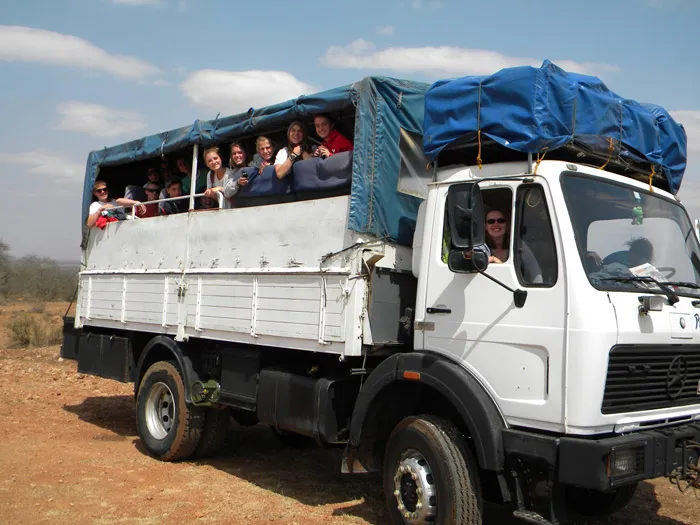
Whatever Happened to Overland Travel
Whatever Happened to Overland Travel? There was a time when reaching a place was part of understanding it. We traveled by road because the road let us see what lay between the names printed on the map. Cities did not simply follow one another on an itinerary. Between them were mountains, farms, villages, forests, rivers, roadside cafés, markets, breakdowns, conversations, uncomfortable nights and unexpected friendships. We called it overland travel. It was not always comfortable. Sometimes it was dusty, slow and unpredictable. But perhaps that was part of its education. Today we can cross countries in hours. We fly over landscapes that once took days to traverse. We arrive in one city, photograph its monuments, sleep in a beautiful hotel and fly to the next. Travel has become easier. But I sometimes wonder whether, in making travel easier, we have also made it easier to miss the country itself. The Country Between the Destinations Morocco makes me think about this often. A traveler can visit Fez, fly or drive quickly to Marrakech, continue to the Sahara and return home having seen some of Morocco's most celebrated places. But Morocco is not only Fez, Marrakech and the Sahara. What happens between Fez and Marrakech? The road climbs into the Middle Atlas. The climate changes. Architecture changes. Agriculture changes. Cedar and oak forests appear. Shepherds move through landscapes very different from the plains surrounding Fez. Towns such as Ifrane and Azrou introduce another Morocco before the road eventually descends again. The distance between two cities is not empty. It has a personality of its own. And that is what overland travel lets us discover. Overland Travel Does Not Have to Mean Hardship Perhaps one reason overland travel lost some of its appeal is that we still imagine it as it once was. I remember another era of overland travel: long journeys, simple campsites, basic facilities, communal cooking, breakdowns, dust and considerable improvisation. I loved much of it. But I am not suggesting that we reproduce the discomforts of forty or fifty years ago merely because we survived them. Living in Australia has shown me another possibility. Here, I have encountered campsites and roadside accommodations that maintain a close relationship with nature while providing remarkably good facilities. Some combine camping areas with cabins or bungalows. There may be excellent shared kitchens, clean bathrooms, hot showers, places to cook and eat together, and comfortable accommodation for people who do not wish to sleep under canvas. The lesson is simple: Being close to nature does not require being uncomfortable. And comfort does not necessarily require isolating ourselves from nature. An interesting space exists between the primitive campsite and the luxury hotel. Perhaps that space deserves exploration. Could Camping Become Part of Travel Again? Not camping simply because it is inexpensive. And not “glamping” that recreates a hotel room under canvas. I mean small-scale nature accommodation designed around the place itself. Imagine traveling through Morocco and spending one night in a riad in Fez, another in a small lodge among the mountains, another in a simple bungalow near a village, and another beneath canvas on the edge of the desert. Good beds. Clean bathrooms. Hot water. Good food. Shade. A communal kitchen or gathering place. And outside the door: the landscape you came to experience. This kind of accommodation could also make tourism possible in rural places where constructing conventional hotels would make little environmental or economic sense. A small camp or nature lodge can employ local people, purchase food nearby, use regional building traditions, support guides and craftspeople, and allow travelers to remain longer in communities they might otherwise simply drive through. Then accommodation itself becomes part of responsible travel. The Return of the Road Technology does not have to be the enemy of this kind of journey. We can have GPS and still become curious about where we are. We can carry a telephone and still put it away. We can travel in a comfortable vehicle and still stop at a village market. We can sleep in a good bed and still hear the wind outside. Perhaps the question is not whether we should bring back the overland travel of the past. We cannot. The world has changed, and travelers have changed with it. The more interesting question is whether we can create a new form of overland travel suited to the world we live in now, comfortable enough for today's traveler, responsible toward the places we cross, but slow enough to allow discovery. Traveling Through, Not Flying Over For me, the great gift of overland travel was never simply adventure. It was continuity. When you travel across a country by land, geography begins explaining culture. You understand why a town grew beside a river. Why people built with earth in one region and stone in another. Why food changes as the landscape changes. Why markets appear where roads meet. Why mountains separate communities, and sometimes connect them. Gradually, a country stops being a collection of attractions. It becomes a relationship between land and people. That is something I believe travel still has the power to reveal. Perhaps the future of overland travel will not look like its past. Perhaps it shouldn't. But I hope we never lose the curiosity that once made us take the long road simply because we wanted to know what was there. And perhaps the next generation of travelers will discover something some of us learned many years ago: Sometimes the road between two destinations is the destination. I have spent much of my life traveling, but some of the journeys I remember most clearly are not the places I reached. They are the roads that took me there.
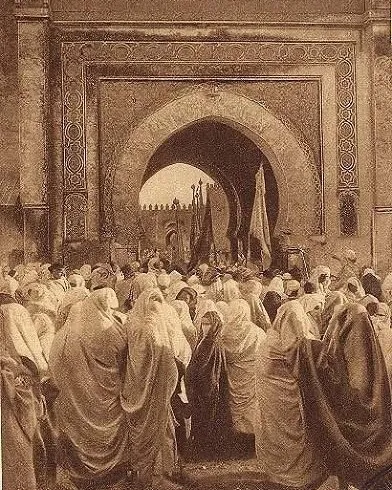
Bab Segma in Fez
Bab Segma in Fez: The Historic Gate, Marinid Gardens and a City's Memory Fez is often described through its medina, mosques, madrasas, souks, and famous gates. But some of the city's most interesting stories survive in places that are easily passed without notice. Bab Segma is one of them. Located north of Fez el-Jdid, near the New Mechouar and Kasbah Cherarda, Bab Segma is remembered today principally through two massive octagonal towers. At first, they may appear to be simple remnants of Fez's old fortifications. Their story, however, leads us into something much larger: a vanished royal garden, an extraordinary medieval water system, the Marinid rulers of Fez, and eventually a woman whose name became attached to the place. Bab Segma and the Marinid Royal Gardens The origins of Bab Segma date back to the Marinid period, when Fez was transformed by the creation of Fez el-Jdid, the new royal city founded in the 13th century. The two great octagonal towers associated with Bab Segma are believed to have formed part of an entrance to the Mosara Garden, an enormous royal garden created around 1287 under the Marinid Sultan Abu Ya'qub Yusuf. The garden has disappeared, but Bab Segma allows us to imagine something of its scale. This was not simply a small ornamental garden beside a palace. It occupied a substantial area north of Fez el-Jdid and was enclosed within its own walls. And, as so often happens in Fez, the story of architecture soon becomes a story about water. Water, Architecture and the Intelligence of Fez The Mosara Garden required a sophisticated water supply. An elevated aqueduct carried water from the area of Bab Dekkakin toward Bab Segma, passing through the great octagonal towers before continuing into the royal gardens. Openings still visible in the towers show where this water system once passed. This small architectural detail tells us something important about historic Fez. A city cannot be understood only through its monuments. Behind its gardens were irrigation systems. Behind its fountains were water networks. Behind its hammams, houses, workshops, mosques, orchards, and agricultural lands was an extraordinary understanding of how water could be collected, distributed, shared, and used. Bab Segma therefore belongs not only to Fez's military architecture but also to the history of its landscape and urban engineering. Where Did the Name Bab Segma Come From? The name came later. Historical accounts associate it with a pious woman named Amina Sagma, who was buried near the site in 1737. Her memory became so closely connected with the place that the name Bab Segma survived as a local place-name and was eventually associated with the gate and surrounding area. There is something particularly Fassi about this. Cities are officially built by rulers, architects, craftsmen, and engineers. But people rename them through memory. A woman buried beside a monumental structure created centuries earlier eventually gave the place the name by which generations would remember it. The monument belonged to history. The name belonged to memory. Bab Segma Through an Old Photograph Old photographs and postcards of Bab Segma allow us to see more than architecture. Look carefully, and the monument becomes only part of the image. Clothes, gestures, roads, animals, walls, shadows, people entering and leaving, and the landscape surrounding the city appear. What appears to be a photograph of a gate becomes evidence of how people once occupied the space around it. This is why historical photographs of Fez are so valuable. They do not merely show us what has disappeared. They show us how the city was lived. Fez: A City That Can Be Read Through Its Gates Bab Segma belongs to a much larger family of gates, walls, towers, kasbahs, and passages that developed as Fez expanded over the centuries. But the gates of Fez were never simply holes made in defensive walls. A gate could tell you where a road was going, which community lived nearby, what trade took place there, what landscape lay beyond the walls, or which political authority controlled that part of the city. Some names remembered professions. Others remembered tribes, saints, neighborhoods, markets, geographical directions, or particular events. To study the gates is therefore to begin reading the geography of historic Fez. And Bab Segma gives us an especially beautiful example because so much of what once surrounded it has vanished. The royal garden disappeared. The medieval landscape changed. The aqueduct ceased carrying water. The city expanded around it. Yet the towers remained. And so did the name. Preserving More Than Stone When we speak about preserving the architectural heritage of Fez, we often think first about restoring walls, gates, houses, madrasas, fountains, and monuments. That work is essential. But preservation must also protect the stories that explain why those stones matter. Without those stories, Bab Segma becomes two old towers beside a modern road. With them, we begin to see a Marinid royal garden. We imagine water moving along an aqueduct. We encounter centuries of changing urban life. We remember Amina Segma. And suddenly a fragment of architecture reconnects us with the people who lived around it. Perhaps this is one of the great pleasures of discovering Fez. The city rarely reveals everything at once. Sometimes we must stop before two old towers and ask a simple question: What happened here? And Fez begins to speak.
Sarah Tours and Discoveries
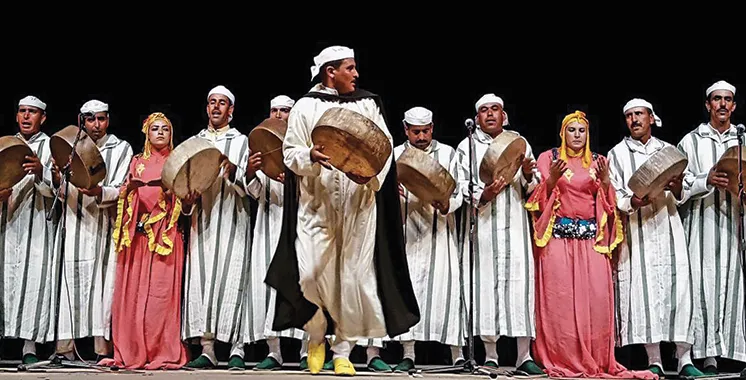
Sarah Tours: Thirty Years of Experience, A New Digital Journey The way we travel is changing. Not so long ago, travellers discovered destinations through guidebooks, travel agents, newspaper articles and recommendations from friends. Today, the journey often begins differently. We search Google, watch videos, explore social media, read stories online and increasingly use artificial intelligence to help us imagine where we might go next. At Sarah Tours, we have watched these changes with great interest. For more than thirty years, our work has been built around something very simple: bringing travellers and destinations together through meaningful journeys. We began long before social media, smartphones or artificial intelligence became part of everyday travel. Our reputation grew through experience, personal relationships, trusted partners and travellers who returned home and recommended Sarah Tours to others. Today, we are preparing Sarah Tours for another generation of travellers. A New Sarah Tours Over recent months, we have been quietly renewing ourselves. Our destinations now reach across Africa, Europe and Asia. We are improving the way travellers discover our journeys, expanding our cultural and educational programs, developing new small-group and private experiences, and creating a richer collection of stories about the places we visit. You will see some of those changes throughout our website. But this is not a new Sarah Tours replacing the old one. It is thirty years of experience learning to speak through the tools of today. Technology allows us to communicate faster, reach travellers around the world and introduce destinations in ways that were unimaginable when our first journeys began. Yet the reason we travel has not changed. We still travel because we are curious. We travel to encounter landscapes different from our own, to hear another language, taste unfamiliar food, walk through history, meet people and occasionally discover that those we thought were very different from us are not so different after all. The World Behind the Destination This is also why our website is becoming more than a collection of tours. Through the Sarah Tours Journal, we want to share the world behind the destinations: their history, music, architecture, agriculture, spiritual traditions, food, people and stories. A traveller considering Morocco should be able to discover something about Fez before arriving there. Someone travelling between Spain and Morocco should understand why the history of Al-Andalus did not simply end at the Strait of Gibraltar. A traveller crossing the Sahara should know that the road beneath the wheels was once part of a much older world of caravans, trade and human movement. Travel becomes richer when curiosity begins before departure. Modern Tools, Human Journeys Sarah Tours welcomes the new technological world. Google, social media, YouTube and artificial intelligence are changing how travellers discover the world, and we intend to be part of that future. But technology will remain a doorway. On the other side of that doorway are still people. A guide. A driver. An artisan. A farmer. A musician. A family. And somewhere among them, a traveller arriving with curiosity. After more than thirty years, we remain convinced that this is where the most meaningful journeys begin. Sarah Tours is changing with the times. The reason we travel is not.
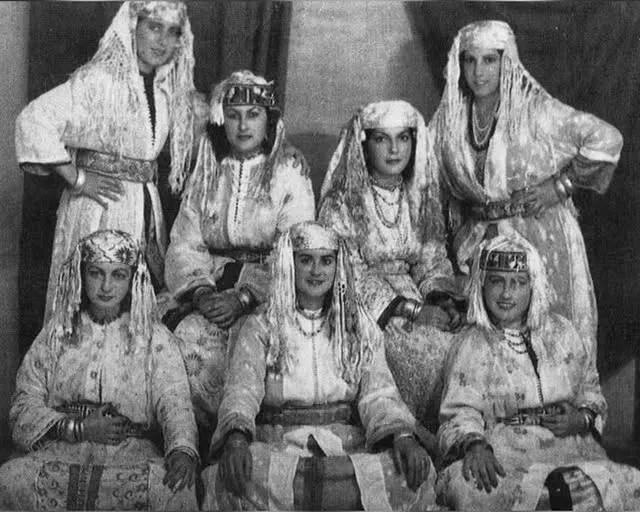
Tetouan, the White Dove: An Andalusian City Reborn
Tetouan, the White Dove: An Andalusian City Reborn There is an old Moroccan saying: “The tagine of Fez, the water of Chefchaouen, and the elegance of Tetouan.” In a few words, the proverb gives each city its crown. Fez is celebrated for its kitchen, where centuries of refinement transformed cooking into an art. Chefchaouen is blessed with the fresh waters descending from the Rif Mountains, particularly around Ras El Maa, surrounded by the green landscapes of northern Morocco. And Tetouan? Tetouan receives the prize for elegance. Perhaps that is why its famous name, al-Hamama al-Bayda—the White Dove—has always seemed so appropriate to me. Tetouan possesses a certain whiteness, cleanliness and quiet refinement that distinguishes it even among Morocco's historic cities. But behind that elegance lies a remarkable story. A City Reborn We know Tetouan today as one of northern Morocco's great cultural centres, yet it is easy to walk through its medina without realizing that much of the city's identity was shaped by people who arrived carrying the memory of another homeland. Tetouan suffered severe destruction during the fifteenth century. Its revival is closely associated with Ali al-Mandri, an Andalusian who came to Morocco during the final decades of Muslim rule in Granada. Under al-Mandri and the Andalusian families who settled there, Tetouan rose again. They did not simply reconstruct walls and houses. They brought with them knowledge, craftsmanship, habits, music, cuisine, architecture, and memories of the civilization they had known across the Strait of Gibraltar. Gradually, Tetouan developed into something much greater than a defensive settlement. It became an Andalusian-Moroccan city. Its narrow streets, whitewashed houses, enclosed courtyards, mosques, fountains, workshops, and fortifications reflected the meeting of two traditions that were already deeply related: Moroccan craftsmanship and the Andalusian urban culture carried south by migrants from Iberia. When Refugees Rebuild More Than Houses This is perhaps the part of Tetouan's story that interests me most. When people are displaced, they do not travel only with what they can carry in their hands. They carry invisible things. They carry recipes. Songs. Ways of arranging a house. Ways of planting a garden. Words and expressions. Memories of streets. Ideas about beauty. Even ways of preparing a table or welcoming a guest. The Andalusians who came to northern Morocco could not bring Granada, Seville, or the other cities they had left behind. But they could preserve fragments of that world in the places where they began again. Tetouan became one of those places. And this is why travelling through its medina should be more than sightseeing. Look carefully at the houses. Notice the proportions of the streets and courtyards. Observe the doors, tiles, ironwork and white façades. Listen to the music. Taste the food. Even the particular refinement for which Tetouan's people became known belongs to a much longer cultural memory. The city became not a copy of Andalusia, but something more interesting: a Moroccan city in which Andalusian memory was allowed to take root again. The White Dove Perhaps we can now return to our old proverb: The tagine of Fez. The water of Chefchaouen. The elegance of Tetouan. Moroccan folk wisdom sometimes compresses an entire anthropology into a sentence. Fez developed its reputation for refinement around the table. Chefchaouen was blessed by the waters and mountains of the Rif. And Tetouan cultivated an elegance felt in its architecture, its homes, its crafts, and even in the reputation of its people. Whether or not this is historically why Tetouan came to be called the White Dove, the name has always seemed perfect to me. White for the city that rises against the mountains. A dove for something graceful that crossed from one shore to another and found a place to land. And perhaps that is the deeper story of Tetouan. It is not simply a city that was rebuilt. It is a city where a displaced civilization learned how to make a home again.
The Boy from Fez book
Everyone Has a Fez Why I Wrote The Boy from Fez My new memoir, The Boy from Fez, will be published on October 15, 2026. I have wondered how I should announce it. I could tell you that it is a book about my childhood in Fez, Morocco. I could describe its chapters, its people, its houses and streets. I could tell you about the city in which I was born and the family that raised me. All of that would be true. But it would not tell you why I wrote the book. I wrote The Boy from Fez because I began to understand that when people disappear, entire worlds can disappear with them. Not the great events recorded by historians. Those usually survive. I mean the smaller things. The way a grandmother held a child's hand. The smell coming from a kitchen before noon. The baker who knew every family in the neighborhood. The voice of the water carrier in the street. The sound of a door opening. A proverb repeated so often that nobody remembered who first said it. The particular silence of a house in the afternoon. The rituals around a meal. The songs women sang while working. The way people greeted one another. The stories children heard before they were old enough to understand that one day they would become the custodians of those stories. These things rarely enter history books. Yet perhaps they are the things from which we are made. The Fez I Carry I was born in Fez, one of the world's ancient cities, but The Boy from Fez is not primarily about monuments. The Fez I wanted to preserve was alive. It had voices. It had fragrances. It argued. It laughed. It prayed. It cooked. It traded. It celebrated. It mourned. Its wisdom did not live only in libraries or mosques. It lived in kitchens, workshops, courtyards, markets and conversations. It lived in craftsmen's hands and grandmothers' sayings. It lived among people whose names will never appear in history books but without whom there would have been no history worth remembering. Among them was my grandmother, Mi Lalla. As a little boy, I often experienced Fez while holding her hand. I did not know then that she was teaching me. Children rarely know when they are being formed. We simply walk beside those we love. Only much later do we discover that their voices have somehow become part of our own. I travelled far from that little boy. I crossed countries and continents. I encountered other cultures, languages, religions, landscapes and ways of understanding the world. Yet the farther I travelled, the more I understood something strange: The boy had come with me. Fez had come with me. Everyone Has a Fez But while writing this book, I discovered something I had not expected. Fez does not belong only to me. Everyone has a Fez. Your Fez may not have ancient walls or narrow alleys. It may be your grandmother's kitchen in Sicily. A village in India. A neighborhood in New York that no longer exists. A farmhouse somewhere in Australia. A courtyard in Andalusia. A childhood in Senegal. It may be the smell of bread your mother baked, the tree you climbed as a child, a schoolyard, a song, a father's expression, an old neighbor, a family table around which people once gathered. Sometimes Fez is not even a place. It may simply be the sound of a mother's voice you have not heard for thirty years. We all come from somewhere. And that somewhere continues living within us long after geography has carried us elsewhere. This is why I have not written The Boy from Fez to tell readers that my childhood was more beautiful than theirs, or that the past was better than the present. I have no desire to compete with the present. I wanted only to remember. And perhaps by remembering my Fez, I might awaken yours. I shared my Fez to revive theirs. That, more than anything, became the purpose of this book. A Gift to My Daughter There is also one reader for whom this book carries a different meaning. My daughter, Asia. She was born and raised in America, in another country, another culture and another generation. She knows the man who became her father. But I wanted to leave her a way of meeting the boy who existed before him. I wanted her to know the houses that sheltered him, the grandmother whose hand he held, the parents and family who formed him, the streets he walked, the beliefs he inherited and questioned, the people whose kindness remained with him, the mistakes, laughter, customs, songs and silences from which her father slowly emerged. Not because she must become any of these things. Her life belongs to her. Her identity belongs to her. I ask nothing from her. The Boy from Fez is simply a gift waiting on a shelf. She can open it whenever she wishes. Perhaps I will be sitting beside her when she does. Perhaps I will not. That is one of the reasons we write. A human voice eventually becomes silent. A written voice can wait. Years from now, she may open the book and find a little boy waiting there. And perhaps he will take her hand and say: Come. Let me show you where your father came from. Why We Remember Writing this memoir has taught me that remembrance is not the same as nostalgia. Nostalgia sometimes wants yesterday back. I don't. Yesterday had its hardships, injustices, fears and limitations. I would not exchange the possibilities of today merely to recover the world of my childhood. But neither do I believe that progress requires forgetting. We can walk forward while occasionally turning our heads toward those who helped us reach the road. That is what The Boy from Fez has allowed me to do. I turned around. And there they were. Some had been gone for decades. Yet while I wrote, they returned. Mi Lalla returned. The houses opened their doors. The neighborhood began making noise again. Someone was baking bread. Someone was calling from another room. Someone was telling a story I had almost forgotten. For a few hours each day, through the strange mercy of memory, the vanished became present. Perhaps that is another reason human beings tell stories. Not to defeat death. But to refuse to let love disappear without leaving a trace. An Invitation On October 15, I will send The Boy from Fez into the world. After that, the book no longer belongs entirely to me. Every reader will bring something to it that I could never have written. His grandmother. Her father. Their childhood. Their street. Their kitchen. Their losses. Their laughter. Their Fez. And perhaps somewhere, someone will close the book one evening and suddenly remember something that has not visited them for fifty years. A face. A fragrance. A voice. A hand. If that happens, then the little boy from Fez will have accomplished what I hoped he might. I shared my Fez so that you might remember yours. Everyone has a Fez. Where is yours?
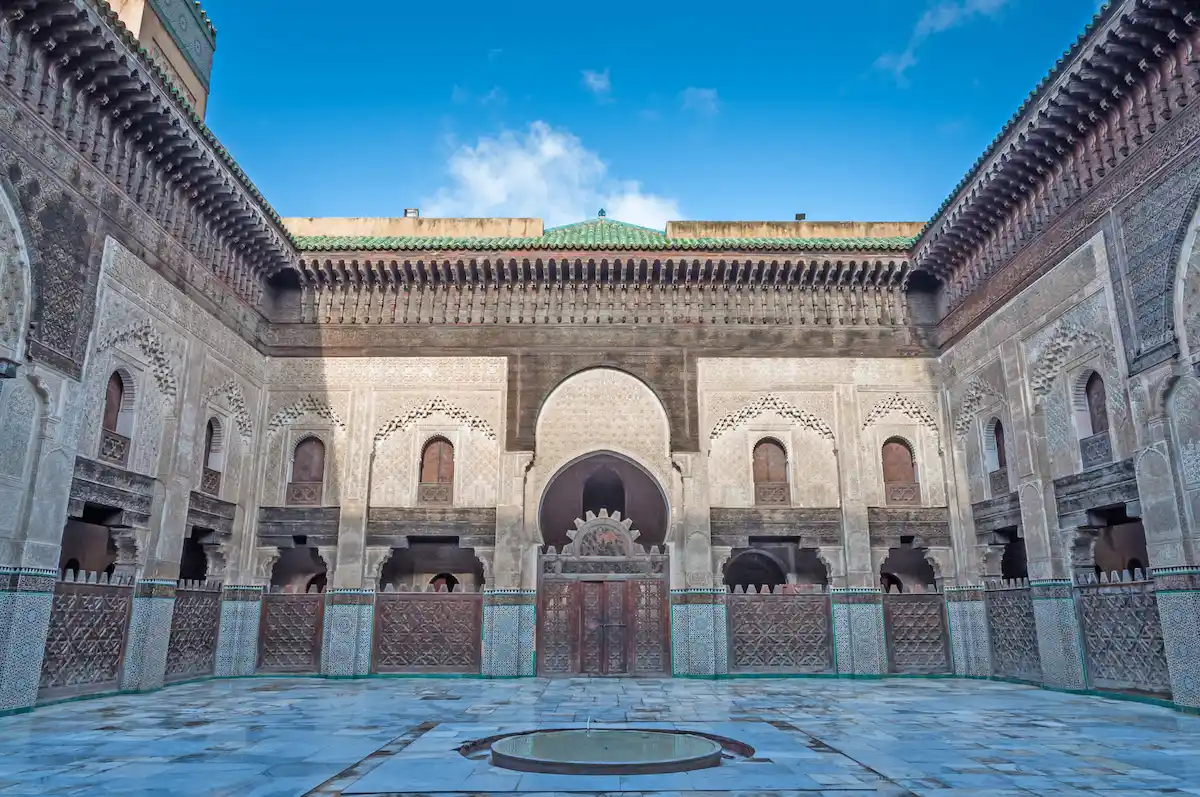
How Morocco became a Destination
From Traveller to Tourist: How Morocco Became a Destination Travel existed long before tourism. Morocco knew the traveller centuries before anyone thought of packaging Marrakech, Fez, Meknes and Rabat into an itinerary. The traveller was a familiar figure. He might have been a merchant crossing the Sahara, a scholar travelling from one centre of learning to another, a pilgrim beginning the long journey eastward toward Mecca, a diplomat carrying a message from a sultan, a craftsman seeking work, an exile escaping persecution, an explorer driven by curiosity—or even a spy gathering information for a foreign ruler. People travelled because they had somewhere to go, something to seek, something to exchange, something to learn, or sometimes something from which to escape. The journey was rarely the product. It was the road toward something else. Perhaps no Moroccan embodies this older meaning of travel better than Ibn Battuta. When he left Tangier in 1325, at about the age of twenty-one, he was not a tourist departing on an organised journey. He was setting out on pilgrimage. Yet that first intention carried him into one of history's most extraordinary journeys. For centuries, Moroccans moved through a world connected by pilgrimage, scholarship, diplomacy, commerce and migration. Fez communicated intellectually with centres far beyond Morocco. Caravans travelled south across the Sahara. Mediterranean ports opened toward Europe and the eastern Mediterranean. Pilgrims moved eastward toward the holy cities. Morocco was never isolated. It was already a country of travellers. What changed in the nineteenth and early twentieth centuries was not the discovery of travel. Something subtler happened. Morocco itself became the reason for travelling. When Morocco Entered the European Imagination Before Morocco became a tourism destination, it became an imagined destination. European diplomats, military officers, writers, painters, adventurers and explorers had been coming for centuries. But during the nineteenth century, Morocco increasingly occupied a particular place in the European imagination. It offered proximity and difference at the same time. Europe was only across the Strait of Gibraltar, yet Morocco seemed to many European visitors to belong to another world. Its medinas, souks, clothing, architecture, horses, ceremonies, landscapes, light and public life fascinated painters and writers searching for subjects different from industrialising Europe. Eugène Delacroix's journey to Morocco in 1832 became particularly influential. Later came other artists associated in different ways with the European fascination for Morocco: Benjamin-Constant, Henri Matisse, Hilda Rix Nicholas and many others. Tangier became one of the great doors through which this encounter took place. For the painter, Morocco offered colour. For the writer, mystery. For the adventurer, the unknown. For European society increasingly fascinated with what it called the Orient, Morocco offered exoticism remarkably close to home. But we should be careful when looking backward. These visitors did not all see the same Morocco, nor did they arrive with the same intentions. Some approached the country with genuine curiosity and admiration. Others inevitably carried the prejudices and hierarchies of nineteenth-century Europe. The intellectual climate of the period often divided humanity into categories such as civilized and primitive, advanced and backward, modern and traditional. Orientalism could produce extraordinary art and scholarship, but it could also turn living societies into objects to be observed, classified and romanticized. And colonialism added another dimension. Europe no longer merely wanted to encounter other worlds. Increasingly, it believed it had the authority to reorganise them. Travel, scholarship, commerce, military expansion and colonial ambition sometimes walked disturbingly close together. Morocco stood at the intersection of all of them. Tangier: The Door Tangier occupied a special place. Geography had already decided much of its destiny. Standing at the entrance to the Mediterranean and looking toward Europe across one of the narrowest maritime crossings between the two continents, Tangier had long been diplomatic, commercial, and strategic. By the beginning of the twentieth century, its international character intensified. The arrangements surrounding the establishment of the French and Spanish protectorates in 1912 left Tangier under a special regime, and in 1923 the Tangier Protocol established the framework for the International Zone. The result was one of the strangest urban experiments of the twentieth century. Diplomats, businessmen, artists, writers, adventurers, expatriates, wealthy visitors and people seeking freedoms unavailable elsewhere all passed through Tangier. It became international before international tourism had acquired its contemporary meaning. Tangier was not simply visited. It was imagined. And imagination is one of tourism's most powerful engines. Before someone purchases a journey, they must first desire a place. Marrakech: The Exotic City If Tangier was the door, Marrakech became one of Morocco's great promises. The ochre walls, palm groves, Atlas Mountains, souks, gardens, storytellers, musicians and great square offered precisely the visual language that early twentieth-century European travellers associated with an exotic Morocco. Yet modern tourism requires more than desire. A destination needs access. It needs transportation. It needs accommodation. It needs information. It needs someone to tell the prospective traveller: Come. This is what you will see. This is where you will stay. This is how you will get there. Under the French Protectorate, these pieces increasingly came together. Hubert Lyautey understood the political and economic value of presenting Morocco to European visitors. Tourism could demonstrate accessibility, order and stability while generating economic activity and strengthening the image of the Protectorate abroad. The gaze of the Orientalist was gradually being joined by something more systematic: destination marketing. Building the Infrastructure of the Tourist The traveller of earlier centuries adapted himself to the road. Modern tourism increasingly adapted the road to the traveller. That distinction matters. Transport companies connected cities. Roads became more reliable. Shipping companies promoted access from Europe. Railway and motor transport expanded. Guidebooks explained what should be seen. Posters created desire. Hotels offered an environment in which affluent European visitors could encounter Morocco while retaining familiar standards of comfort. The creation of the Central Tourism Committee in 1918 signalled that tourism was no longer merely happening spontaneously. It was becoming something to be organised and promoted. The Guides Bleus helped transform a complicated country into something legible to the visitor: routes, monuments, hotels, distances and recommended circuits. Transport networks performed the same function physically. The establishment of CTM in 1919 helped connect Moroccan cities by modern road transport. Maritime companies such as Compagnie de Navigation Paquet connected Morocco with European ports and helped promote the destination visually. Then came the great hotels. La Mamounia opened in Marrakech in 1923. Palais Jamaï in Fez, created from a former palace, became another prestigious address associated with elite travel. These establishments were more than places to sleep. They represented a new compromise between two worlds: the experience of Morocco with the comforts expected by wealthy international travellers. A visitor could spend the afternoon wandering through a medina and return in the evening to an elegant hotel. Morocco was becoming accessible without becoming entirely familiar. That balance, comfort surrounded by difference, would become one of the enduring formulas of international tourism. The Birth of the Imperial Cities The expression “Imperial Cities” did not create the historical importance of Fez, Marrakech, Meknes and Rabat. Each had already served as a seat of Moroccan power under different dynasties and periods of the country's history. What changed during the early Protectorate was the way these cities were presented to the foreign traveller. Resident-General Hubert Lyautey, deeply impressed by Morocco's historic cities, pursued a policy of preserving their old medinas while developing new European quarters alongside them. Within the emerging tourism strategy, these former capitals came to be presented collectively as the Villes Impériales — the Imperial Cities. Early Hachette travel literature, including the Guides Bleus, documented and promoted the circuit, while tourism posters presented it visually to prospective visitors abroad. Roads, motor transport, hotels and guidebooks made it possible to transform four historically distinct capitals into a journey that could be organised, repeated and sold. Moroccan history had created the capitals. Modern tourism turned them into a circuit. That circuit proved remarkably durable. A century later, “The Imperial Cities of Morocco” remains one of the country's best-known itineraries. The Imperial Cities. The expression fascinated me for years. Fez, Marrakech, Meknes and Rabat were unquestionably historic centres of royal power. Each had served as a capital under different periods and dynasties of Moroccan history. But Moroccans did not create these cities as a tourism circuit. History created four capitals. Tourism connected them into one journey. An old French Guide Bleu from the early 1920s that I have kept among my materials presents the Imperial Cities as an organised circuit. I also possess an early tourism poster promoting the Imperial Cities itinerary. These documents are particularly interesting because they show us something happening almost in front of our eyes. A tourism product was being born. Marrakech could represent the exotic south and the great imperial traditions of the Almoravids, Almohads and Saadians. Fez offered the ancient medina, scholarship, craftsmanship and the legacy of the Idrisids and Marinids. Meknes evoked Moulay Ismail and the ambitions of the early Alaouite state. Rabat combined older dynastic monuments with its new position as the administrative capital. Each city possessed its own history. Tourism gave them a shared name. The Imperial Cities of Morocco. Roads connected them. Guidebooks explained them. Hotels accommodated their visitors. Posters romanticised them. Transport companies moved travellers between them. And tour organisers transformed them into a repeatable itinerary. The importance of this innovation is easy to overlook because the itinerary became so familiar. A century later, travellers are still purchasing variations of essentially the same journey. Sarah Tours itself has offered Imperial Cities journeys. The route survived empires, independence, aviation, package tourism, the internet and social media. That tells us something about the extraordinary durability of a well-created travel narrative. The Invention of the Destination This is where we should distinguish carefully between history and tourism. The French did not discover Fez. They did not create Marrakech. They did not give Meknes its imperial history. They did not make Rabat historically important. These cities possessed their civilizations long before modern European tourism existed. What the emerging tourism industry did was something different. It selected. Connected. Named. Interpreted. Promoted. It transformed places into destinations and destinations into itineraries. That process is still at the heart of tourism today. A country contains thousands of places. Tourism chooses which ones the visitor is told to desire. Edith Wharton and the Written Morocco Writers also played an important role in this transformation. Edith Wharton travelled through Morocco in 1917 as the guest of Resident-General Lyautey. Her subsequent book, In Morocco, introduced the country to a substantial English-speaking readership. Her Morocco is fascinating precisely because it sits at the intersection of travel literature, Orientalist fascination and the political environment of the Protectorate. This is why travel writing deserves attention in the history of tourism. Before photographs fill websites and videos circulate instantly around the world, someone must create the Morocco that exists in the imagination of the person who has never been there. Writers did that. Painters did that. Later photographers and poster designers did it. Today Instagram, YouTube and travel websites do it. The technology changed. The principle did not. We travel twice: first in imagination, then in geography. From Exploration to Organisation By the early twentieth century, therefore, many of the essential components of modern Moroccan tourism were appearing together. There was an international image of Morocco. There were gateways. There were transportation networks. There were prestigious hotels. There were guidebooks. There were tourism institutions. There were posters. And increasingly, there were defined itineraries. The traveller was becoming a tourist. This did not mean curiosity disappeared. Nor did it mean every visitor suddenly became superficial. It meant that travel could increasingly be purchased as an organised experience. Someone else had selected the route. Someone else had identified the monuments. Someone else had chosen the hotel. Someone else had calculated the time. Someone else had decided what constituted the Morocco worth seeing. The uncertainty of travel was gradually being replaced by the architecture of tourism. Then Another Traveller Appeared But history rarely moves in a straight line. By the 1960s and 1970s, another generation began arriving in Morocco. They were young. They travelled cheaply. They came in Citroën 2CVs, Volkswagen campers, vans, motorcycles, converted buses and those extraordinary overland trucks that fascinated me as a teenager. Many rejected precisely the highly organised tourism their parents' generation had embraced. They wanted the road again. They wanted unpredictability. They wanted contact. They wanted to stay longer and spend less. They wanted to cross borders rather than fly over them. And, once again, Morocco was waiting at Europe's doorstep. I know this generation intimately because it was through them that tourism entered my own life. One morning, when I was still a schoolboy in Fez, I found young European travellers camping near the entrance to our family farm. Later, our farm became informally known among travellers as a place where one could camp. The instructions were apparently simple: “Go there and ask for Hamid.” Then came the overland trucks at Bab Khokha near my high school. Guerba, Sundowners, Insight, Capricorn, Contiki and later Topdeck are among the names I remember from that remarkable period. I stared at those vehicles and dreamed of travelling in them. Eventually, I did. I became a licensed guide in 1974, travelled throughout Morocco and later across Africa, and led journeys that sometimes lasted for months. That generation taught me another meaning of travel. The traveller did not have to stand outside a culture and look at it. He could walk inside it. Anthropology Before Anthropology Years later, I formally studied anthropology. But the road had already begun my education. Travelling slowly taught me to listen. Camping taught me that comfort and richness of experience are not the same thing. Crossing borders taught me that cultures appear much simpler from a distance than they do when you live among people. Guiding taught me something else. I did not enjoy standing in front of travellers and asking them to follow me. I preferred walking beside them. Eventually I understood why. I wasn't showing them Morocco. I was sharing my culture with them. That distinction would eventually become central to my philosophy of travel. When Tourism Became an Industry The decades that followed transformed tourism again. Commercial aviation made distant destinations accessible to millions. Package tours reduced uncertainty. Large hotels expanded. International brands arrived. Cruise ships grew. Online booking changed distribution. Review platforms changed reputation. Low-cost airlines changed geography. And finally smartphones changed the traveller's relationship with the unknown. Tourism became one of the world's great industries. This brought enormous benefits. Millions of people who could never have undertaken the journeys of Ibn Battuta—or even the overland travellers of the 1970s—could encounter other countries and cultures. Tourism created employment. It supported hotels, restaurants, guides, drivers, artisans and countless small businesses. It connected people who otherwise might never have met. But scale also introduced dangers. Places could become products. Cultures could become performances. Hospitality could become transactions. Communities could receive visitors without receiving a fair share of tourism's benefits. Nature could become scenery to be consumed. And the traveller could return home with thousands of photographs without ever truly encountering the place photographed. The tourist had conquered distance. But sometimes distance remained between people. Can the Tourist Become a Traveller Again? This, for me, is the question facing tourism today. I do not believe we should romanticise the past. The old roads were uncomfortable. Travel could be dangerous. Information was scarce. Many people simply could not afford to travel. Modern tourism has democratised experiences that were once available only to aristocrats, adventurers or people willing to endure considerable hardship. I do not want to return to 1923. Nor do I want to recreate 1973. I want to preserve something both periods can teach us. Curiosity. The willingness to encounter rather than merely consume. The humility to enter another person's country as a guest. The patience to listen before judging. The understanding that the people serving our meal, driving our vehicle, weaving our carpet or opening their village to us are not part of the scenery. They are our hosts. And they have as much right to benefit from the journey as we do. From Tourist to Guest Perhaps, then, the next evolution of tourism is not technological. Perhaps it is human. We began with the traveller. We created the tourist. Perhaps now we need to rediscover the guest. A guest arrives with curiosity but also respect. A guest understands that hospitality creates obligations on both sides. A guest does not ask merely: What can I take from this place? but also: What relationship am I entering by being here? That is where responsible and sustainable travel begin for me. Not with slogans. With relationships. The traveller should benefit. The guide should benefit. The driver should benefit. The hotel and restaurant should benefit. The artisan and farmer should benefit. The local community should benefit. The natural environment should not pay the price for everybody else's profit. And the culture should remain more than a performance staged for outsiders. Travel succeeds when the encounter leaves both host and guest richer. A Century After the Imperial Cities There is something wonderfully circular about this story. A century ago, an early traveller could open a Guide Bleu, discover the Imperial Cities and set out toward Marrakech, Rabat, Meknes and Fez. Today, someone can open a telephone thousands of kilometres away and book essentially the same route in minutes. The roads are better. The hotels are more comfortable. The vehicles are faster. The information is almost limitless. But the fundamental question has not changed: Why are you travelling? If the answer is simply to collect places, tourism can provide them efficiently. But if the answer is to understand something beyond ourselves, then we must recover some of the spirit of the traveller. Morocco has been receiving strangers for centuries. Pilgrims passed through it. Merchants traded in it. Scholars studied in it. Diplomats negotiated in it. Painters imagined it. Colonial administrators reorganised it. Tourists photographed it. Overlanders crossed it. And millions of visitors continue to arrive every year. Each generation invented its own Morocco. But Morocco was always more complicated than the image created for it. Perhaps that is the responsibility of travel today: not merely to see Morocco, but to allow Morocco to reveal itself. That is the kind of travel I still believe in. It is the reason I remained in tourism. It is the reason I created Sarah Tours. And after more than half a century of travelling, guiding, studying and listening, I find myself returning to something I learned almost accidentally as a young man in Fez: The best journey is not one in which the guide walks ahead and the tourist follows behind. It is one in which we walk beside one another. Perhaps tourism does not need another invention. Perhaps it simply needs to remember the traveller from whom it came.
Morocco FAQs
In-depth cultural and active tours to Morocco often cover a wide range of experiences. Our cultural, adventure, and spiritual tours to Morocco include:
• Exploring historic cities like Marrakech, Fes, Meknes, and Rabat, where travelers can discover UNESCO-listed medinas, kasbahs, and mosques, among many other landmarks.
• Visiting the ancient Roman ruins of Volubilis and the holy town of Moulay Idriss near Meknes, well-preserved sites that showcase Morocco’s deep-rooted history and culture.
• Engaging with Berber culture in the Atlas Mountains, where travelers can learn about traditional crafts, architecture, and local life in remote Berber villages and rural markets.
• Experiencing the Sahara Desert Mystery, with camel treks, nomadic life, and a night in traditional Berber tents under the African skies.
• Moroccan cuisine is known worldwide as one of the best gastronomies. Sarah Tours itineraries focus diligently on Moroccan gastronomy, savoring Moroccan cuisine through cooking classes, food markets, and meals in local homes.
• Attend local festivals or cultural events like the World Sacred Music Festival in Fes, sharing the deepest authentic spiritual encounters
Taking a tour to Morocco with us is to guarantee a rewarding experience. Authenticity is key in cultural tours, and many of our tours offer the chance to:
• Stay in traditional riads (guesthouses) or boutique hotels for a more genuine experience than large hotels. Knowing how to choose the best accommodations to embellish your Morocco discovery is an advantage Sarah Tours has over other tour operators.
• Interact with local artisans, musicians, and storytellers, allowing travelers to learn firsthand about Moroccan traditions. Music Tours to Morocco are our specialty.
• Participate in daily activities, such as visiting a family home for a meal in one of our historic cities, such as Fez or Marrakech, exploring local markets (souks), or spending time with Berber families in the mountains.
Morocco is a hospitable destination, a predominantly Muslim country, so understanding local customs is very rewarding:
• Dress modestly, especially when visiting religious sites. Dress decently, men and women. Women should cover their shoulders with dresses or pants to show respect and not disturb the spiritual environment and rituals of worshipers.
• Always ask permission before taking photos, especially of people in rural areas, as they tend to be more conservative, traditional, and superstitious, or in markets where people are busy with their livelihood.
• Haggling is common in markets, but always be polite and friendly. It is mainly about interacting with locals, especially artisans. They admire appreciation for their products. • Avoid public displays of affection, as these can be frowned upon in conservative areas. Moroccans have great respect for shared space and time for everything.
• When meeting locals, greet them with a handshake or say "Salam Alaikum" (peace be upon you). Moroccans compete for who is going to be more polite in greetings. Our guides are excellent at sharing this info with you. Not just recite texts from historical sites.
Cultural tours to Morocco with us often feature a variety of accommodations to give travelers an authentic Moroccan experience:
• Riads or Dar: Riads are traditional Moroccan dwellings with interior gardens in their patios. A Dar with a roof garden but a tiled or marbled patio. They are located in medinas (old cities) and offer intimate, cultural stays with Moroccan décor and architecture.
• Kasbahs or Guesthouses: In rural areas, you may stay in beautifully restored granaries, fortresses, or traditional homes with family-run hospitality. They are mainly in southern Morocco oases and valleys.
• Desert Camps: If you visit the Sahara Desert, you may spend a night in a Berber camp, typically in traditional Berber tents or luxury conditioned tents with modern amenities but an authentic desert feel in the midst of the dunes.
Food is a vital part of Moroccan culture, and cultural tours often include. Sarah Tours is a champion in this department, providing the best culinary experience in all of its tours:
• Guided food tours of local markets to try authentic eateries or street food like M’semmen (flatbread), Harira (thick fermented soup), and briouat (triangular philodow pastries).
• Cooking classes where travelers can learn how to prepare staples like tagine (a slow-cooked stew) or couscous under the guidance of local chefs. This could be done in most of the riads you will be lodged in as they are mainly family-owned accommodations.
• Home-cooked meals with Moroccan families, providing insight into traditional eating customs. This is a step deeper as it is spontaneous and most authentic. You can ask for this experience while traveling with Sarah Tours.
• Visits to spice markets and tea ceremonies, where mint tea is a cultural staple. This is an experience not only for buying spices but also for being educated by experts about the benefits of herbs and spices.
While Morocco’s official languages are Arabic and Berber (Amazigh), French is widely spoken, especially in cities and tourist areas.
• English is commonly understood in most tourist regions, but learning a few Arabic or Berber phrases can enhance the cultural experience. Simple words like “Shukran” (thank you) or “Salam” (hello) are appreciated.
• Tour guides usually speak multiple languages so that communication won’t be a barrier, but practicing a few phrases is encouraged. Please ask them at least how to learn greetings in Moroccan dialect or Arabic.
Morocco is known for its vibrant festivals, which vary by season and ethenicity:
• Fes Festival of World Sacred Music: This major cultural event in June attracts international performers of sacred music from all denominations in a stunning spiritual setting.
• Marrakech Popular Arts Festival: Held in July, this festival showcases Morocco’s folklore through music, theater, and dance. Folk music and dance are the core of every culture's artistic, spiritual, and ritualistic expression. The Folk Festival of Marrakech is a pallet of Morocco's social and anthropological aspects of life among Berbers and Arabs in Morocco.
• Timitar Festival in Agadir: In July, this festival celebrates Berber culture and music. It is open to world fusions as it is the heart of old ritualistic tunes deeply rooted in Africa.
• Moussem of Tan-Tan: A UNESCO-recognized cultural event where thousands of nomads gather for a traditional camel festival, embracing innovation while maintaining traditional ways. Sarah Tours is a scholarly tour operator.
• Rural day markets (souks): Daily village or Berber nomadic souks are a festival in themselves. You are welcome to visit them on your road trip.
• Sarah Tours is always searching for spontaneity, so wherever a cultural ceremony is happening, you will be first invited to it.
Sarah Tours In-depth cultural tours prioritize meaningful engagement with local communities, often including:
• Homestays with Berber families in cities, the Atlas Mountains, and the Sahara Desert.
• Workshops with artisans in medinas, where travelers can learn traditional crafts such as pottery, weaving, and leatherwork directly at artisan's workshops.
• Visits to rural villages, offering you to see the lifestyle of local farmers, herders, and craftspeople on your trip with Sarah Tours.
• Our Morocco tours often provide opportunities for community-driven tourism projects, where fees support local initiatives and conservation efforts. We also specialize in agriculture tours, visiting farms, and sustainable projects.
Cultural or adventure tours typically include Morocco's most significant historical, natural, and religious landmarks with immersive activities: • Koutoubia Mosque in Marrakech is one of the largest mosques in North Africa and has marvelous architecture.
• Hassan II Mosque in Casablanca, Morocco's largest mosque, has stunning ocean views, unsurpassed Moorish architecture, and Islamic Caligraphy on marble, plaster, tiles, and cedar wood. All purely Moroccan arts are created by master local artisans and architects of the Kingdom of Morocco.
• Fes el-Bali (Old Fes): The most significant and oldest medina in Morocco, it is full of mosques, madrasas (Islamic schools), craftsmen's guilds, and souks. It is a UNESCO World Heritage city that has maintained its vibrant life for over 12 centuries.
• Moulay Idriss Zerhoune: a holy town and the birthplace of Islam in Morocco from the 8th century AD. A sufi sanctuary for Muslims from around the globe.
• Chefchaouen: The most authentic blue city and perhaps the most atmospheric in the Mediterranean basin.
• Kasbah Ait Benhaddou is a UNESCO World Heritage Site and an example of traditional Moroccan earthen clay architecture. It is called the Tobe style, and it is made of sun-baked bricks unique to Morocco's southern desert and valleys. In Spanish, it is Adobe derived from the a tobe in Arabic, literally earthen.
• The Sahara experience: At least one tented night over the dunes of Erg Chebbi under the African skies. This could be the highlight of any overland trip in Morocco.
Packing depends on the season and region, but for an in-depth cultural experience:
• Modest clothing: Light, breathable fabrics covering shoulders and knees, particularly for spiritual visits.
• Comfortable walking shoes for exploring medinas, souks, and rural areas.
• Layers: The weather can vary, especially between coastal, mountainous, and desert regions. Bring warm clothes if visiting the mountains or desert at night.
• Sunscreen, sunglasses, and a hat: Morocco’s sun can be intense, particularly in desert areas.
• Re-usable water bottle: Staying hydrated is key, especially during walking tours. Most importantly bring yourself, and get your camera rolling. Morocco is a very photogenic destination.
Depending on the itinerary, our tours use a variety of transportation options, including private vehicles, 4x4s for desert excursions, camels in the desert and oases, and mules in the Atlas Mountains for trekking experiences. We may also use domestic flights or comfortable vans since we cater to small groups for longer distances to ensure a smooth and enjoyable journey.
Indeed, Sarah Discoveries most tours to Morocco include breakfast and dinner, especially those that showcase local cuisine. You’ll enjoy a mix of traditional dishes like couscous, tagines, and fresh seafood. We also cater to dietary preferences, including vegetarian and vegan options, with advance notice.
It all depends on where you come from. Citizens from Great Britain, the European Union Nations, North America, the USA, Canada, and others can visit Morocco for up to 90 days without a visa. We advise you to check with your local Moroccan Embassy or consulates for the most up-to-date information. You are always welcome to Morocco.
Morocco is the most stable and safe to visitors in the whole African continent. Safer than Spain and France in Europe. Morocco is generally safe for tourists, especially in major tourist areas like Marrakech, Casablanca, Fez, and the Sahara Desert. However, staying informed about local conditions and following travel advisories is essential to visit any destination on earth.
Let’s Begin With a, Conversation
Every meaningful journey begins with listening. Tell us what interests you, how you like to travel, and what you hope to discover. Whether you already have a journey in mind or are just beginning to explore Morocco, we would be delighted to share our knowledge and help you create a journey that feels genuinely your own.
Get in Touch