Tetouan, the White Dove: An Andalusian City Reborn
There is an old Moroccan saying:
“The tagine of Fez, the water of Chefchaouen, and the elegance of Tetouan.”
In a few words, the proverb gives each city its crown. Fez is celebrated for its kitchen, where centuries of refinement transformed cooking into an art. Chefchaouen is blessed with the fresh waters descending from the Rif Mountains, particularly around Ras El Maa, surrounded by the green landscapes of northern Morocco.
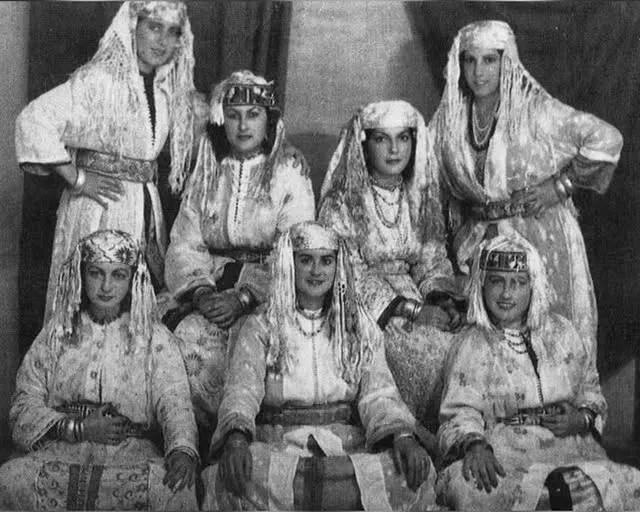
And Tetouan? Tetouan receives the prize for elegance. Perhaps that is why its famous name, al-Hamama al-Bayda—the White Dove—has always seemed so appropriate to me. Tetouan possesses a certain whiteness, cleanliness and quiet refinement that distinguishes it even among Morocco's historic cities.
But behind that elegance lies a remarkable story.
A City Reborn
We know Tetouan today as one of northern Morocco's great cultural centres, yet it is easy to walk through its medina without realizing that much of the city's identity was shaped by people who arrived carrying the memory of another homeland.
Tetouan suffered severe destruction during the fifteenth century. Its revival is closely associated with Ali al-Mandri, an Andalusian who came to Morocco during the final decades of Muslim rule in Granada.
Under al-Mandri and the Andalusian families who settled there, Tetouan rose again.
They did not simply reconstruct walls and houses. They brought with them knowledge, craftsmanship, habits, music, cuisine, architecture, and memories of the civilization they had known across the Strait of Gibraltar.
Gradually, Tetouan developed into something much greater than a defensive settlement. It became an** Andalusian-Moroccan city.**
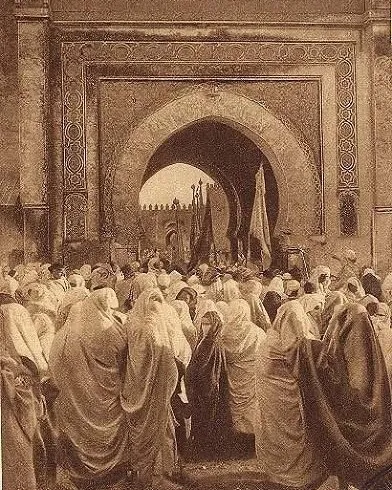
Its narrow streets, whitewashed houses, enclosed courtyards, mosques, fountains, workshops, and fortifications reflected the meeting of two traditions that were already deeply related: Moroccan craftsmanship and the Andalusian urban culture carried south by migrants from Iberia.
When Refugees Rebuild More Than Houses
This is perhaps the part of Tetouan's story that interests me most. When people are displaced, they do not travel only with what they can carry in their hands. They carry invisible things. They carry recipes. Songs. Ways of arranging a house. Ways of planting a garden. Words and expressions. Memories of streets. Ideas about beauty. Even ways of preparing a table or welcoming a guest.
The Andalusians who came to northern Morocco could not bring Granada, Seville, or the other cities they had left behind. But they could preserve fragments of that world in the places where they began again. Tetouan became one of those places.
And this is why travelling through its medina should be more than sightseeing. Look carefully at the houses. Notice the proportions of the streets and courtyards. Observe the doors, tiles, ironwork and white façades. Listen to the music. Taste the food. Even the particular refinement for which Tetouan's people became known belongs to a much longer cultural memory.
The city became not a copy of Andalusia, but something more interesting: a Moroccan city in which Andalusian memory was allowed to take root again. The White Dove Perhaps we can now return to our old proverb: The tagine of Fez. The water of Chefchaouen. The elegance of Tetouan. Moroccan folk wisdom sometimes compresses an entire anthropology into a sentence. Fez developed its reputation for refinement around the table. Chefchaouen was blessed by the waters and mountains of the Rif. And Tetouan cultivated an elegance felt in its architecture, its homes, its crafts, and even in the reputation of its people. Whether or not this is historically why Tetouan came to be called the White Dove, the name has always seemed perfect to me.
White for the city that rises against the mountains. A dove for something graceful that crossed from one shore to another and found a place to land. And perhaps that is the deeper story of Tetouan. It is not simply a city that was rebuilt.
It is a city where a displaced civilization learned how to make a home again.