Morocco travel designed by locals delivered personally
Boutique Morocco Tours for travelers want depth, not crowds
It's More Extraordinary with Sarah Tours
Sarah Tours is the company people think of when they want customized tours in Morocco. We believe that travel is more than just ticking off destinations from a list. It's about immersing yourself in the heart of each place, to truly discover a destination. Our incredible adventures span all seven continents and allow you to delve deeper with local immersion, exploring not just the iconic sights but also the hidden corners known only to the locals, sustainable and immersive journeys.
Free cancellation
Enjoy peace of mind with our flexible booking policy - cancel with advance notice and receive a complete refund for your scheduled experience.
Why choose us
24/7 Staff Assistance
Whether near or far from home, your trip will be local led and full of immersive experiences, with small groups 6-12 people.
Meticulous Assessment
You deal with Morocco and trans-Africa's best specialists for immersive and sustainable tours and expeditions.
Budget Tours
Multiple choices of tours and active overland trips with best offers for all budgets All through Africa.
Adventure Articles
Khenifra: The Hidden Heart of Morocco
Khénifra: The Hidden Heart of Morocco Most travelers know Morocco through its imperial cities, deserts, and coastlines. Few realize that the true heart of the country beats quietly in the Middle Atlas Mountains. Nestled among cedar-covered mountains, rivers, springs, and highland pastures, Khénifra remains one of Morocco's least appreciated treasures. While many travelers pass through on their way to other destinations, those who stop discover a region that has shaped Morocco's geography, economy, culture, and environment for centuries. Khénifra is not simply another mountain town. It is the water tower of Morocco. It is the lungs of Morocco. It is one of the country's most important reservoirs of natural wealth. A Land of Water Water is life in Morocco, and much of that life begins in the mountains surrounding Khénifra. Just twenty kilometers from the city lies the village of Ain Leuh, whose name means "Spring of Timber." This remarkable region is home to dozens of natural springs that emerge from the heart of the Middle Atlas. These waters give birth to the Oum Er-Rbia River, Morocco's second-longest river. From its mountain origins, the river begins a long journey westward across the country, irrigating millions of hectares of farmland before reaching the Atlantic Ocean near Azemmour. To the south, another great river begins its journey. Near Ksabi, not far from Khénifra, rise the springs of the Moulouya River. Unlike the Oum Er-Rbia, which flows toward the Atlantic, the Moulouya travels north and east, nourishing vast agricultural lands before reaching the Mediterranean Sea. Together, these river systems sustain communities, farms, orchards, and ecosystems across much of Morocco. To understand Khénifra is to understand where Morocco's water begins. The Lungs of Morocco The Middle Atlas surrounding Khénifra contains one of the largest cedar forests in North Africa. More than 84,000 hectares of magnificent Atlas cedar cover the mountains, creating an ecological treasure of immense importance. These forests are far more than beautiful landscapes. They regulate water cycles. Protect fragile mountain soils. Provide habitat for wildlife. Store carbon. And support traditional pastoral communities that have lived among them for generations. The Atlas cedar is among Morocco's most prized timbers. For centuries it has been used in the construction of palaces, mosques, riads, and traditional homes. Its fragrance, durability, and beauty have made it one of the country's most valued natural resources. Walking through these forests is one of Morocco's most rewarding outdoor experiences. Ancient cedar trees, mountain trails, hidden valleys, and panoramic viewpoints offer visitors a side of Morocco rarely seen by conventional tourists. A Land of Marble and Stone Beneath the forests and mountains lies another source of wealth. The region around Khénifra contains significant deposits of red and gray marble, prized for their quality and beauty. For generations, this stone has supplied Moroccan craftsmen, architects, and builders. From private homes to public buildings, from traditional architecture to modern construction, the marble of the Middle Atlas has helped shape Morocco's built environment. Today, this marble is exported around the world, carrying a piece of Khénifra far beyond Morocco's borders. The Homeland of the Zayan Khénifra is also the cultural heartland of several important Amazigh tribes, including the Zayan, Beni Mguild, and Ait Ishaq. These communities have shaped the identity of the Middle Atlas for centuries. Known for their hospitality, resilience, courage, and deep connection to the land, they developed a way of life perfectly adapted to mountain environments. Many families continue to practice forms of seasonal transhumance, moving livestock between summer and winter grazing grounds according to ancient rhythms that long predate modern borders and roads. Their traditions remain visible in everyday life. In the architecture of villages. In the seasonal movement of shepherds. In the weaving of rugs. In the preparation of food. In the poetry, music, and oral histories passed from one generation to another. The famous carpets of the region, woven from mountain wool and decorated with symbolic Amazigh motifs, are among Morocco's most distinctive artistic traditions. A Paradise for Nature Lovers For travelers seeking authentic experiences, Khénifra offers extraordinary opportunities. Mountain trekking. Forest walks. Wildlife observation. Birdwatching. Rural tourism. Traditional pastoral life. Photography. Cultural encounters. The landscapes change constantly with the seasons. Spring transforms the mountains into a mosaic of wildflowers and green pastures. Summer brings cool mountain air and long days for exploration. Autumn covers the forests with rich colors, while winter often blankets the higher elevations with snow. This is Morocco at its most natural. It's most authentic. It's most overlooked. Discovering the Hidden Heart In a country celebrated for its imperial cities and deserts, Khénifra remains one of Morocco's best-kept secrets. It is a region that asks visitors to slow down. To listen to the rivers. To walk beneath ancient cedars. To share tea with shepherds. To discover traditions that have endured for centuries. Khénifra may not appear on every travel itinerary. Perhaps that is precisely its greatest strength. For those willing to venture beyond the familiar, Khénifra reveals another Morocco. A greener Morocco. A quieter Morocco. A Morocco where rivers are born, forests breathe, and mountain cultures continue to thrive. The hidden heart of the Kingdom.
Taza: Morocco's Forgotten Frontier
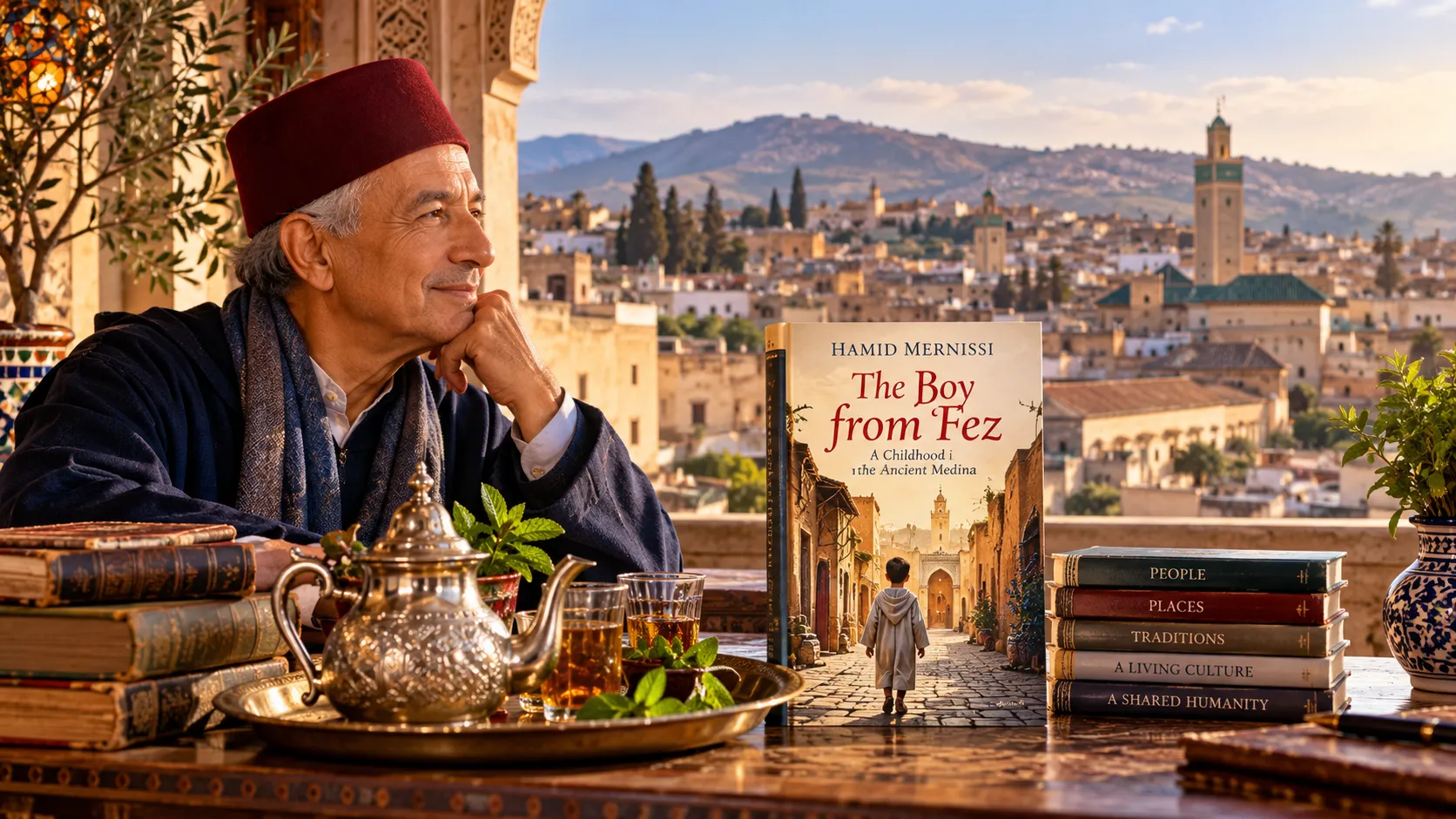
Taza: Morocco's Forgotten Frontier Some cities announce themselves loudly. Others reveal themselves slowly. Taza belongs to the second category. For many travelers, Taza is simply a city passed on the road between Fez and Eastern Morocco. Cars stop briefly for coffee, fuel, or lunch before continuing their journey. Few realize that they are crossing one of Morocco's most strategic, historic, and culturally fascinating regions. I have traveled through Taza since childhood. The more I visited, the more I wondered why this remarkable region receives so little attention compared to other destinations in Morocco. It possesses a combination of history, geography, culture, mountains, forests, caves, and rural traditions that is difficult to find elsewhere in the country. Taza is not merely a city. It is a gateway. For centuries it controlled the famous Taza Corridor, the natural passage connecting western Morocco with the eastern regions of North Africa. Nestled between the Rif Mountains and the Middle Atlas, this narrow passage shaped the movement of armies, traders, pilgrims, shepherds, dynasties, and entire civilizations. Whoever controlled Taza controlled one of Morocco's most important crossroads. The historical heart of the city is known as Upper Taza, or Taza al-Olya. Built upon a rocky ridge overlooking vast plains and mountain landscapes, the old city commands spectacular views in every direction. Its narrow streets, traditional homes, ancient walls, and historic gates still preserve the atmosphere of a Morocco largely untouched by mass tourism. Walking through Upper Taza is like stepping into a forgotten chapter of Moroccan history. The city's Great Mosque, built during the Almohad period by Abd al-Mu'min in the twelfth century, remains one of the most important monuments of the region. Nearby stand the historic gates of Bab al-Rih, Bab al-Jum'a, and Bab al-Moula al-Hassan, silent witnesses to centuries of political change and human activity. The Marinid Kasbah, defensive towers, traditional fountains, and public bathhouses remind visitors that Taza was once a vital center of administration, learning, commerce, and military strategy. Yet history is only part of Taza's story. Anthropologically, the region is fascinating. The mountains surrounding Taza have long served as a meeting point between Arab and Amazigh communities. Tribal traditions, agricultural practices, pastoral life, local architecture, oral history, and religious culture continue to shape everyday life. The region produced scholars, jurists, saints, and Sufi masters. Zawiyas and Quranic schools played an important role in transmitting knowledge, spirituality, and social values from one generation to another. Places such as the Zawiya of Sidi Ayyad and the Zawiya of Bouhali remain part of the region's living heritage. Beyond the city walls begins another world. This is a paradise for travelers seeking authentic outdoor experiences. The surrounding mountains offer exceptional opportunities for hiking and trekking. Dense forests of cedar and oak shelter abundant wildlife. Hidden valleys reveal isolated villages where life still follows the rhythm of the seasons. One of the region's greatest natural treasures is the famous Friouato Cave, one of the deepest and most impressive cave systems in North Africa. Descending into its vast underground chambers feels like entering another universe entirely. For nature lovers, photographers, birdwatchers, anthropologists, and hikers, Taza offers an extraordinary diversity of landscapes rarely associated with northern Morocco. What attracts me most, however, is not a monument or a mountain. It is the authenticity of the people. The inhabitants of Taza are known throughout Morocco for their hospitality, simplicity, and attachment to their traditions. Visitors quickly discover a region where conversations are genuine, where tea is offered naturally, and where local life has not yet been transformed into a performance for tourists. In an age when many destinations compete for attention, Taza remains refreshingly itself. Perhaps that is why I continue to return. Taza does not overwhelm the visitor with spectacle. Instead, it rewards curiosity. It invites travelers to slow down, walk, listen, and discover. Those who make the effort soon realize that Taza is not a place one merely passes through. It is a place worth stopping for. A place where geography shaped history, where history shaped culture, and where culture remains deeply connected to the land. For travelers seeking meaningful encounters, magnificent mountain scenery, rural tourism, cave exploration, and a deeper understanding of Morocco, Taza remains one of the country's most overlooked treasures. Not forgotten by history. Only waiting to be rediscovered. The greatest treasures of Morocco are not always those that appear in guidebooks. Some remain hidden among mountains, forests, caves, and forgotten pathways. Taza is one of those treasures. Not waiting to be invented, developed, or transformed. Simply waiting to be discovered. Hamid Mernissi All rights reserved
Story Tellers in Morocco
Who Are the Troubadours of Morocco? Understanding Al Halqa, the People's University Long before newspapers reached every household, before radio waves crossed valleys, and long before television and social media connected the world, Morocco possessed its own powerful means of communication: Al Halqa. The word Halqa simply means "circle." In practice, it was far more than a circle. It was an open-air theater, a classroom, a newspaper, a parliament, and sometimes even a ministry of information. Wherever people gathered in market squares, near city gates, beside mosques, or in weekly souks. a storyteller would draw a circle around himself. Curious listeners would gather. Soon the crowd would grow into a complete ring of attentive faces. Thus was born the Halqa. At the center stood the storyteller, poet, musician, comedian, magician, healer, or preacher. Around him stood the people: merchants, farmers, craftsmen, travelers, women, children, and laborers. Rich and poor stood shoulder to shoulder, united by a shared appetite for stories and knowledge. For centuries, the Halqa served as the people's university in Morocco. In a society where literacy was not widespread, oral transmission became the principal vehicle of education. Through stories, proverbs, songs, poetry, and humor, ordinary Moroccans learned history, religion, ethics, current events, practical wisdom, and social values. The storyteller was more than an entertainer. He was a guardian of collective memory. Like the troubadours of medieval Europe, Moroccan storytellers preserved heroic tales, historical events, local legends, and moral lessons. They carried knowledge from one generation to another and from one region to another. But the Halqa also performed another important function. It helped society adapt to change. Governments, religious leaders, merchants, and communities often relied upon respected storytellers to communicate new ideas to the public. A message delivered through a story was often more persuasive than an official decree. One fascinating example occurred after Morocco gained independence in 1956. The young nation faced the challenge of strengthening its agricultural sector and reducing dependence on imported food products. Among these efforts was the introduction and expansion of sugar beet cultivation. For generations, many farmers were unfamiliar with sugar beet production. New agricultural techniques needed to be explained, promoted, and accepted. Storytellers became valuable allies in this process. Through humor, songs, stories, and public performances, they introduced audiences to sugar beet cultivation and its potential benefits. Also for a new consumption of a sugar unknown to Moroccans. Agricultural modernization was translated into a language that ordinary farmers could understand and trust. The result was not achieved by storytellers alone. It required farmers, engineers, agricultural experts, cooperatives, and new sugar-processing facilities. Yet the Halqa helped bridge the gap between policy and consumers. It transformed information into understanding. By the 1960s and 1970s, sugar beet cultivation had expanded significantly, contributing to Morocco's growing domestic sugar industry and reducing dependence on imports. This episode reminds us of something often forgotten in modern development. People rarely embrace change because they are instructed to do so. They embrace change when they understand it. And few understood the art of communication better than Morocco's storytellers. Today, the Halqa survives most visibly in places such as Jemaa el-Fnaa in Marrakech, Bab Boujloud in Fez, and daily souks in rural areas where storytellers, musicians, acrobats, and performers continue to gather much as they have for centuries. Yet the true legacy of the Halqa extends far beyond entertainment. It represents a uniquely Moroccan institution where knowledge, culture, memory, humor, and public education merged into a single circle. In many ways, the Halqa was Morocco's first social network. Its storytellers were not merely performers. They were educators, historians, cultural ambassadors, and guardians of the collective imagination. Long before the digital age connected people through screens, the Halqa connected them through stories. And perhaps that is why, despite all modern technologies, the circle still survives. Human beings continue to gather where stories are told.
Beni M'Guild Berber tribes
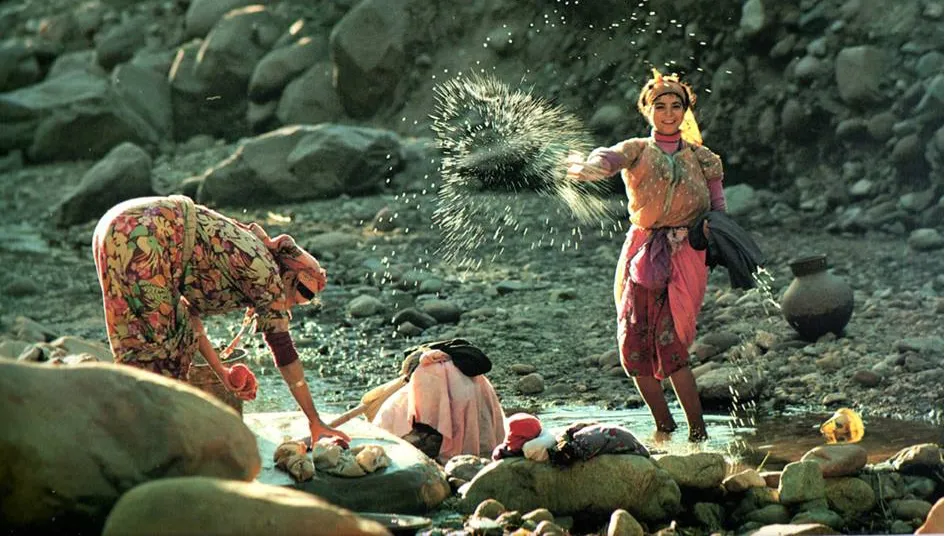
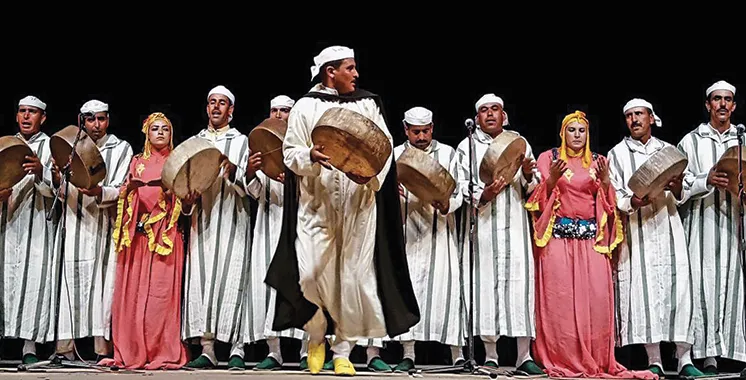
Beni M’guild We Who Belong to the Mountain When you think of the Middle Atlas, you think of us. We are not separate from this land; we are its reflection. Forest, plateau, cold, pasture, water, cedar and oak, snow, and summer grass, these are not landscapes to us. They are our breath. We are the people of wool. Our sheep are not only wealth. They are our food, our warmth, our dowry, our rhythm. They measure our seasons, they carry our survival, they walk with us as we move between what is given and what must be found. We move, but we are not lost. We descend when winter tightens its grip, and we rise when the mountain opens again. We follow grass, water, shade, and wind, not as wanderers without roots, but as a people whose roots are carried within them. We are not only men of flocks. We are also the work of women. In our tents, in our silence, hands spin wool into memory. Colors bloom from earth and plant, reds, ochres, deep shadows of indigo—woven into rugs, handiras, garments, and coverings. Do not call them objects. They are archives. Each thread remembers. Each pattern speaks. Each rug holds a season, a journey, a life lived between cold and fire. We gather in Ahaidous. Do not mistake it for entertainment. It is where we speak without interruption, where rhythm orders the body, where poetry becomes law, where the community sees itself. There, we remember who we are. We are not only what you see. We also live in what cannot be measured. Saints walk among us. Baraka rests in places and passes through hands. We ask for rain, for the protection of our herds, for healing, for the crossing of thresholds that mark a life. Do not reduce this to belief. It is how we remain in balance. They call us Imazighen. They call us Ait Oumalou, people of the shadow. Yes, we live in shadow: the shade of forests, the shadow of mountains, the quiet side of the sun. But in that shadow, we see clearly. We belong to the great Amazigh world of the Middle Atlas, to those who have learned to live where the land does not give easily. Our tongue carries the echo of the Sanhaja, and our territory stretches between the upper Moulouya, the central mountains, and the plateaus that descend toward Meknes. Do not try to fix us in one place. We are not a village. We are a movement that remembers. Some say we are nomads. Others say we are settled. We are neither, nor are we both. We are a people of movement with roots, our identity anchored in memory, our lives shaped by motion. Our rugs are thick because they must be. Winter does not forgive here. They are dense, warm, alive with color, not by choice alone, but because life demanded it. What you call craft, we call necessity. What you call beauty, we call survival. Our wool is not decoration. It is climate, it is economy, it is the work of women, it is the continuation of life. If you wish to know us, do not begin with our objects. Begin with the mountain. Walk where we walk. Feel the cold we endure. Listen to the silence between our words. Then, perhaps, you will begin to understand. By Hamid Mernissi All rights reserved. If you wish to explore the Atlas Mountains, Check with our hiking and trekking Tours at https://sarahtours.com/
Become an insider
Get insider tips, travel inspiration, and exclusive offers you won't find anywhere else — sign up now!