Takshbila Tiwliwla: When a Moroccan Children’s Song Remembers Seville There are memories that survive in books.
Others survive in monuments, family names, recipes, music, embroidery, architecture, and words spoken so often that we forget where they came from. And sometimes history hides inside a children’s game. Many Moroccans of my generation remember a song we sang when we were children: Takshbila Tiwliwla... We sang it without asking what it meant.
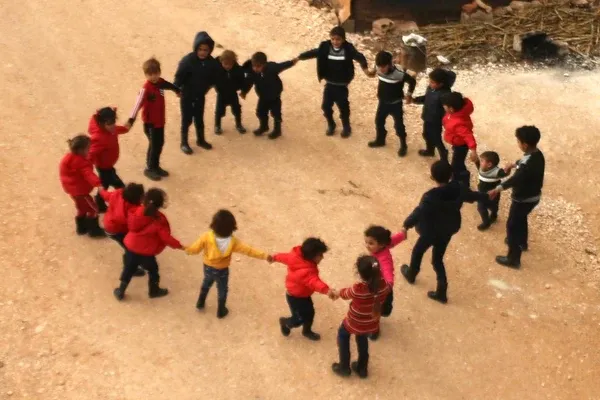
The girls would cross their hands, form a circle, jump and turn together while singing. Watching them, one might even be reminded of the circular movement and gestures of women dancing Sevillanas in southern Spain. We were children.
For us, it was simply a game. But years later, another question began to trouble me: What if the children were remembering something the adults had forgotten? From Takshbila to Ishbiliya There is a popular interpretation in Morocco that connects the mysterious word Shbila in the song with Ishbiliya, the Arabic name for Seville. According to this oral interpretation, Tak Shbila echoes dik Ishbiliya: “That is Seville.”
Other interpretations hear in the following sounds a promise or longing to return. If so, what generations of Moroccan children have been singing as nonsense syllables may contain a distant echo of Al-Andalus. It is an irresistible possibility. But as someone who loves both history and storytelling, I must make an important distinction. We do not possess firm historical evidence proving that the song was composed by expelled Moriscos, nor can we confidently translate every mysterious line as a coded account of persecution.
What we do possess is something different: a remarkably persistent popular memory. And popular memory has its own history. When Muslims Became Moriscos The fall of Granada in 1492 did not immediately end the Muslim presence in Spain. Large Muslim communities remained. Over the following decades, increasing pressure, forced conversion, restrictions on religious and cultural practices, and persecution transformed the lives of these communities. Those Muslims who had been converted to Christianity and their descendants became known as Moriscos. Their position became increasingly precarious. Eventually, between 1609 and 1614, the Spanish Crown ordered their mass expulsion. Hundreds of thousands of people were forced to leave the country in which their families had lived for generations. Many crossed the Mediterranean to North Africa. And many came to Morocco. They brought very little of their physical homeland with them. But human beings carry civilizations in ways that ships cannot measure. They brought language. Music. Recipes. Craftsmanship. Family names. Urban traditions. Agricultural knowledge. Poetry. Memories. And longing. Al-Andalus Did Not Disappear This is where the story becomes especially important for the traveller. The history of Al-Andalus does not end when you leave Spain. Cross the Strait of Gibraltar and the story continues. Walk through Tetouan, and Andalusian memory is everywhere. Enter the old cities of Fez, Rabat, Salé, or Chefchaouen, and you encounter families, musical traditions, architecture, cuisine, craftsmanship, vocabulary, and customs shaped in part by generations who crossed from Iberia to Morocco. The political geography changed. The civilization continued travelling. This is why I have always believed that Spain and Morocco should sometimes be travelled together. If you visit only Andalusia, you see where part of the story unfolded. If you visit only Morocco, you encounter many of its echoes. But when you cross the Strait yourself, something becomes visible that neither shore can explain alone. You begin to understand that the Mediterranean was not always a wall separating Europe from Africa.
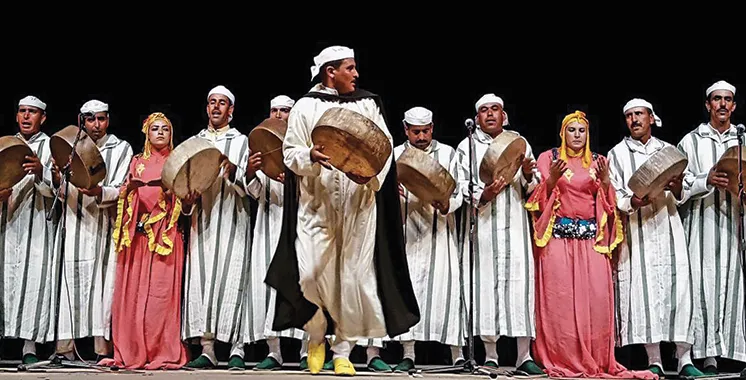
For centuries, it was also a bridge. “They Neither Killed Me nor Left Me Alive” Another remembered line from the Moroccan song is: Ma qtalouni, ma hyaouni. Literally: “They neither killed me nor left me alive.” It is a haunting sentence. Popular interpretations have connected it with the suffering of the Moriscos under persecution and the Inquisition: a human being brought to a condition in which life itself becomes a form of torment. Other lines have also been given historical explanations over generations. One speaks of the cup they gave me. Some have interpreted this as a memory of religious humiliation and forced demonstrations of abandoning Islam. Other obscure phrases have been explained as references to enemies, messages, carriages, or news arriving from afar. Can we prove these interpretations? No. And perhaps we should resist the temptation to force every syllable into a historical explanation. Children change songs. Languages change pronunciation. Words lose their original meanings. Sounds survive after meanings disappear. Oral traditions travel differently from written chronicles. But that does not make the song historically uninteresting. Quite the opposite. The question becomes more profound: Why did generations of Moroccans come to associate this children's song with the memory of Al-Andalus? When Memory Becomes a Game I find something deeply moving in the possibility that historical memory can survive without the people carrying it even knowing what they are carrying. Imagine a Morisco family arriving in Morocco four centuries ago. The grandparents remember Spain. Their children know the stories. Their grandchildren inherit fragments. Another generation remembers a melody. Another remembers only strange words. Eventually, children are jumping in a circle in a Moroccan courtyard, singing syllables whose meanings nobody can explain. History has become play. The tragedy has disappeared from consciousness. But perhaps an echo remains. This is how cultures sometimes remember. Not through dates. Not through official archives. Through gestures. Through food. Through lullabies. Through family expressions. Through the way a grandmother prepares a dish without knowing that her grandmother's grandmother learned it somewhere across the sea. And perhaps through a children's song. Standing in Seville This is why I would like travellers to experience Seville differently. Do not see only the cathedral, the Alcázar, the Giralda, the plazas and the beautiful streets. Listen for Ishbiliya beneath Seville. Then cross to Morocco. Walk through Tetouan. Enter Fez. Listen to Andalusian music. Look at the carved plaster, cedar ceilings, courtyard houses, gardens and fountains. Listen to family names and old expressions. Watch children playing. You may begin to understand that civilizations do not simply disappear when kingdoms fall. They migrate. They adapt. They hide. They remember. Two Shores, One Story Today Spain and Morocco are modern neighbouring countries with their own identities, interests and futures. Our responsibility is not to inherit the conflicts of our ancestors. It is to understand them. History should deepen our humanity, not imprison us inside old grievances. That is one of the reasons cultural travel matters. When we travel deeply, the Alcázar of Seville and the medina of Fez stop being isolated tourist attractions. They begin speaking to one another. A melody heard in Morocco may suddenly remind us of Andalusia. An Arabic word may be hiding inside Spanish. A Moroccan dish may carry an Andalusian memory. A courtyard in Fez may make us remember one we walked through days earlier in Seville. And a children's song may carry us across four hundred years. At Sarah Tours, this is the Morocco-and-Spain journey we want travellers to discover. Not simply two countries joined together because they happen to be geographically close. Two shores of a much larger human story. So the next time you hear Moroccan children singing: Takshbila Tiwliwla... do not rush to decide exactly what every word means. Listen instead. Perhaps it is only a children's song. Perhaps somewhere inside it survives a distant memory of Ishbiliya. We may never know with certainty. But sometimes the most revealing question in travel is not: “Can we prove the story?” It is: “Why have people remembered it for so long?” And somewhere between Seville and Fez, between Ishbiliya and Takshbila, the traveller may discover that history does not always live in museums. Sometimes it is still outside, holding hands, turning in a circle, and singing.
For generations, Moroccan popular memory has understood the song as an echo of the Moriscos' longing for Ishbiliya, Seville, and of the hope that one day they would return.
By Hamid Mernissi All rights reserved